The Evolving IUCPSS: From an Idea of Academic Interaction to a Growing Forum of Vice-Chancellors and Rectors
Posted 1 month ago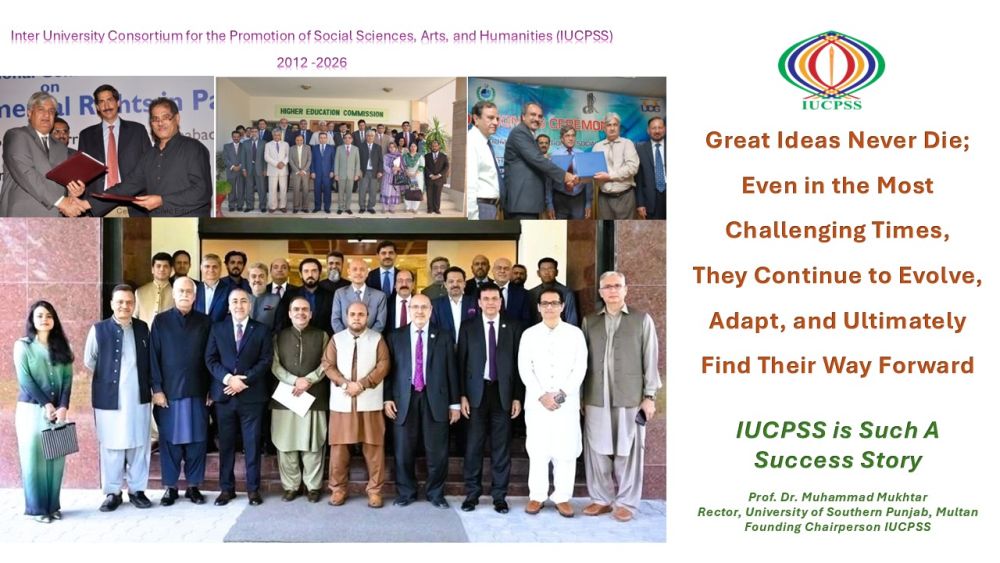
202/2026
The emergence of Vice-Chancellors’ forums in Islamabad and other major cities across Pakistan is an encouraging development for the country’s higher education sector and, in many ways, reflects the continued evolution of an idea that began years ago with a simple yet powerful proposition: academic leaders can achieve far more when they interact, share experiences, and work together toward common goals.
This idea was at the heart of establishing the Inter-University Consortium for the Promotion of Social Sciences, Arts and Humanities (IUCPSS).
The IUCPSS was conceived not merely as another academic organization, but as a platform for interaction, intellectual exchange, and collective action among university leaders and institutions. The underlying philosophy was straightforward: universities should not operate as isolated islands. They should have opportunities to come together, identify common challenges, share successful practices, and develop collaborative initiatives to advance higher education.
The journey, however, was far from easy.
An Idea That Faced Resistance, But Refused to Disappear
Like many new ideas, the concept encountered resistance and several hurdles. Unfortunately, the IUCPSS had to navigate circumstances that made its progress considerably more difficult than originally envisaged.
Yet, the idea survived. More importantly, it continued to evolve.
The central principle that academic leaders benefit from regular interaction and that universities can accomplish more through collaboration proved to be stronger than any single institution, personality, or organizational structure.
Over time, the idea found new expressions.
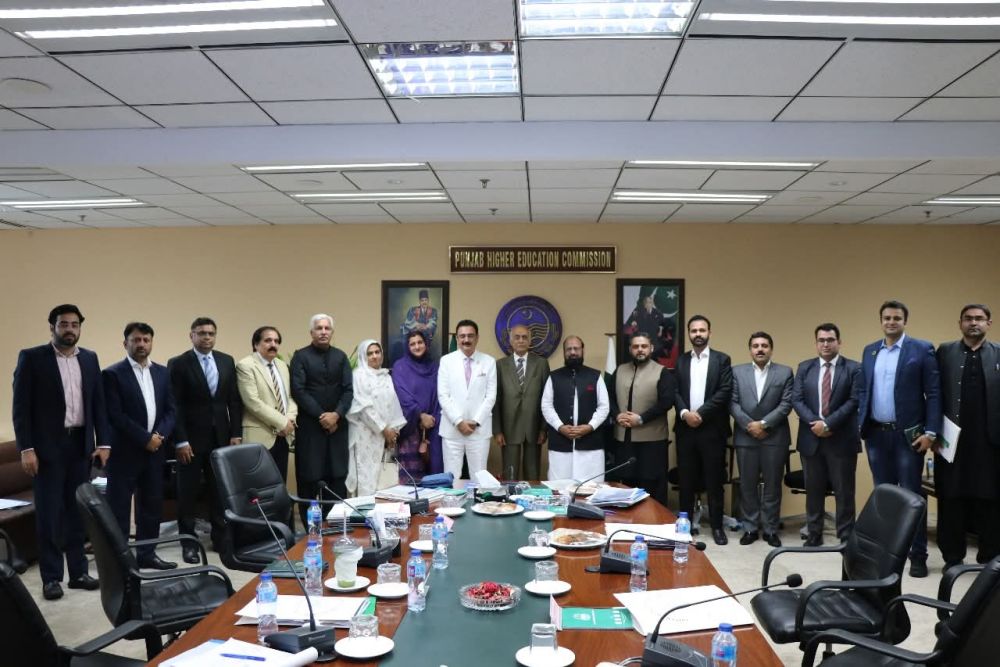
Today, it is fascinating to see Vice Chancellors/Academic Leaders from both the public and private sectors, HEC officials, and university heads gathering in Lahore, Karachi, and Islamabad/Rawalpindi, along with other regional interactions, creating forums where university leaders can interact, exchange views, and discuss issues of common interest.
These gatherings may have different names, structures, or institutional arrangements, but they carry a striking resemblance to the original philosophy behind the IUCPSS movement.
From Consortium to a Culture of Collaboration
The most important development may not be the creation of any forum. Rather, it is the gradual emergence of a collaborative culture among university leadership.
When Vice-Chancellors sit together, the conversation naturally moves beyond the boundaries of individual universities. Common issues emerge: quality assurance, research, innovation, faculty development, internationalization, student opportunities, governance, financing, and the changing role of universities in national development.
This is where inter-university collaboration becomes meaningful. A consortium is not merely a collection of institutions. Its real strength lies in institutions working together toward shared goals.
The original IUCPSS concept was built around this very spirit.
The Islamabad Forum and a Broader Movement
The growing visibility of Vice-Chancellors’ interactions in Islamabad is particularly significant. The capital brings together universities representing diverse academic traditions and institutional models. A forum that enables their leaders to exchange ideas can become a valuable source of collective insight for Pakistan's higher education sector.
The same spirit is evident in gatherings in Lahore and Karachi.
Viewed together, these developments suggest something larger than individual meetings: a sustained movement toward greater interaction among the country's academic leadership. What began as an idea to create bridges among universities is gradually taking different forms across the country. These efforts do not always remain confined to the organization through which they were initially introduced. Sometimes they become part of a broader academic culture, inspiring new platforms and new generations of leaders.
Ideas Have a Life of Their Own
Looking back at the IUCPSS journey, one lesson stands out clearly: good ideas can face resistance, but they do not necessarily disappear.
- They can adapt.
- They can evolve.
- And, sometimes, they can re-emerge in forms that are broader and more powerful than their original expression.
According to Professor Dr. Muhammad Mukhtar, Rector of the University of Southern Punjab. Multan, and Founding Chairperson of IUCPSS, it is particularly gratifying to see an idea once centered on creating opportunities for interaction among academic leaders continuing to find expression in Pakistan's higher education landscape. The names may change. The forums may change. The participating universities may change.
But the underlying idea remains remarkably consistent: universities are stronger when they work together.
The Next Chapter
Pakistan's higher education system faces challenges that no single university can address alone. Research collaboration, innovation, international partnerships, academic mobility, entrepreneurship, emerging technologies, and human capital development all require institutions to look beyond their individual boundaries. This makes the consortium philosophy more relevant than ever.
The evolving Vice Chancellors’ forums in Islamabad/Rawalpindi, Lahore, and Karachi can become important platforms for turning interaction into structured collaboration, joint initiatives, and shared solutions.
Perhaps this is the next chapter in the idea that inspired IUCPSS: not merely bringing academic leaders together but transforming their interactions into sustained cooperation.
The IUCPSS may have begun as a consortium built around the idea of interaction. The movement we see today suggests that the idea itself continues to evolve, finding new platforms, new participants, and new possibilities.