Synchronous vs. Asynchronous Learning: What's the Difference?
Posted 3 months ago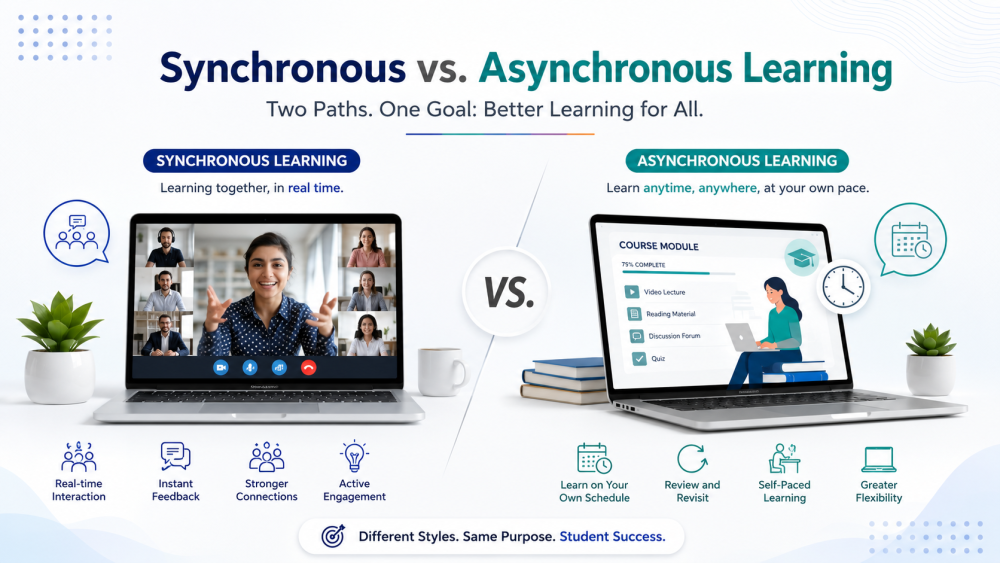
123/2026
The digital revolution has transformed how people learn. Today, students can attend classes from anywhere in the world, communicate with teachers online, and access learning materials anytime. As online education expands, two terms are increasingly important: synchronous and asynchronous learning.
Although they may sound technical, the difference is quite simple.
Synchronous learning occurs when teachers and students are online at the same time. It is like a traditional classroom, except it takes place online. A live lecture on Zoom or Microsoft Teams, where students can ask questions and receive immediate answers, is a good example. This approach fosters a sense of community because participants can see, hear, and interact with one another in real time.
Asynchronous learning, on the other hand, allows students to learn at their own pace and on their own schedule. Instead of attending a live class, students watch recorded lectures, read course materials, complete assignments, or participate in discussion forums whenever it is convenient for them. This flexibility is especially valuable for working professionals, international students, and those with busy schedules.
Both approaches have unique strengths.
Synchronous learning fosters active participation, immediate feedback, and stronger connections between students and teachers. It is especially effective for discussions, group activities, and collaborative problem-solving.
Asynchronous learning offers greater flexibility. Students can revisit lessons, think carefully before responding to discussion prompts, and learn at a pace that suits their individual needs. This often leads to deeper reflection and improved time management.
Rather than choosing one over the other, many educational institutions now combine both approaches. A course might include weekly live online classes alongside recorded lectures, online quizzes, and discussion boards that students complete independently. This approach, often called blended learning, offers both flexibility and personal interaction.
The COVID-19 pandemic accelerated the adoption of online education, demonstrating that learning can continue beyond the traditional classroom. Today, universities are also experimenting with HyFlex learning, in which students can choose to attend classes in person, join live online sessions, or watch recordings later, depending on their circumstances.
Despite these innovations, face-to-face teaching remains an important part of education, especially for laboratory work, practical training, and activities that require hands-on experience. Technology is not replacing teachers; it is giving them more ways to reach and support learners.
Ultimately, the best learning environment depends on students' needs, available technology, the subject being taught, and the course's goals. As education continues to evolve, understanding the differences between synchronous and asynchronous learning will help both teachers and students make the most of the opportunities digital education offers.