Pakistan Joins Global Push for Disaster Resilience at International China Symposium
Posted 3 months ago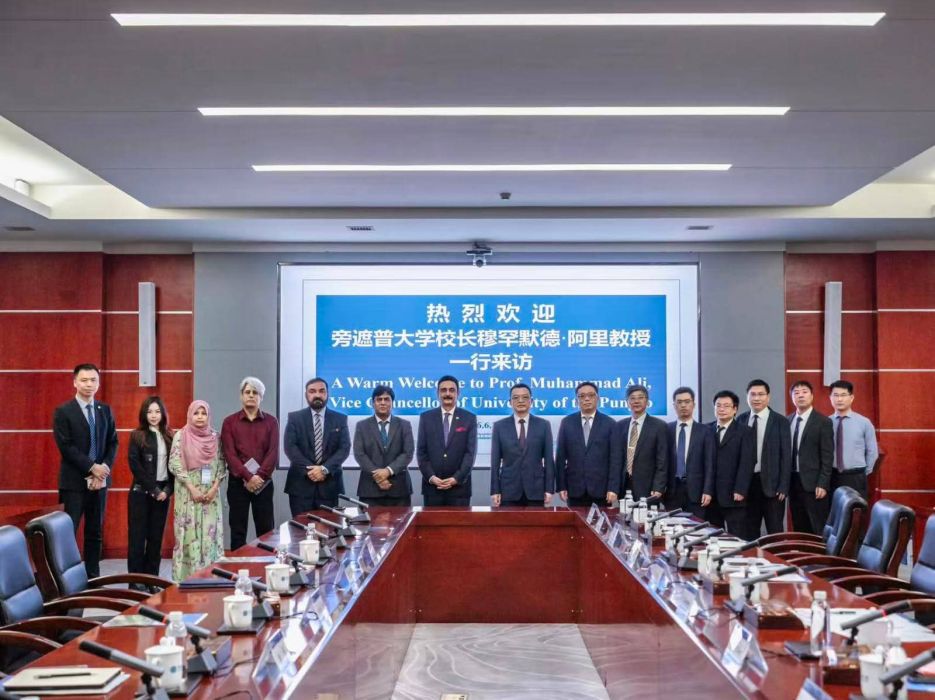
94/2026
Prof. Dr. Muhammad Ali, Vice Chancellor of the University of the Punjab, Pakistan, delivered a keynote address at the 3rd International Symposium on Geo-Hazards Perception, Cognition and Prediction, held June 16–18, 2026.
The symposium brought together leading experts in earth sciences, disaster management, and technological innovation from across Asia and beyond. Organized with participation from international partners, including UNESCO, the International Society for Digital Earth, and the Disaster Response System for the Belt and Road Initiative, the event focused on emerging approaches to earthquake forecasting, geohazard monitoring, and resilience-building in vulnerable communities.
Addressing an audience of researchers, policymakers, and academic leaders, Prof. Dr. Muhammad Ali underscored the importance of international cooperation to confront increasingly complex environmental challenges. His participation highlighted Pakistan’s growing engagement in global scientific discourse and reinforced the University of the Punjab’s expanding presence in international research networks.
The vice-chancellor’s keynote appearance reflects Pakistan’s broader commitment to advancing research excellence and strengthening academic partnerships across borders. As climate-related disasters and geological risks become global concerns, institutions of higher learning are playing an increasingly critical role in generating knowledge and fostering collaborative solutions.
For the University of the Punjab, the invitation to contribute to this high-level forum marks another milestone in its efforts to position itself as a leading center of research and innovation in South Asia. It also serves as a reminder of the vital contributions Pakistani scholars continue to make toward addressing some of the world’s most pressing challenges.
As discussions at the symposium concluded, the message was clear: effective disaster preparedness and risk reduction will depend not only on scientific advances but also on sustained international collaboration, an endeavor in which Pakistan’s academic community is increasingly playing an active and influential role.