Skills, Scholarships, and the Making of a Future Workforce
Posted 8 months ago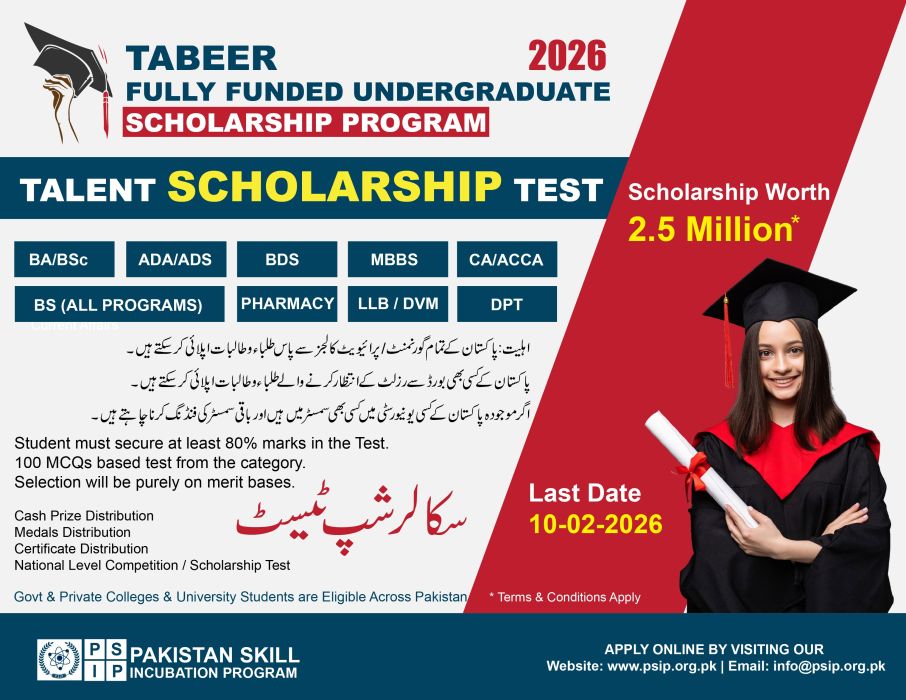
238/25
Tabeer Scholarship is designed to discover and elevate talent across disciplines, from BA and BSc degrees to professional tracks such as MBBS, BDS, Pharmacy, Law, and Commerce. Its promise is audacious: a 2.5-million-rupee scholarship awarded to those who excel in a merit-based talent assessment, offering relief and aspiration to students who might not otherwise see higher education within reach. This opportunity aims to inspire hope and motivate talented students to pursue their dreams.
Yet for many Pakistanis, the scholarship represents more than just financial aid. It embodies a broader goal, one in which education, skills, and national progress connect, shaping citizens ready not only for jobs but also for leadership in a growing, global economy. This program fosters pride in national development and collective progress.
At the heart of Tabeer is PSIP, the Pakistan Skill Incubation Program, a relatively new but fast-growing national organization with a mission to empower youth through skills, education, and opportunity. Founded as a registered initiative dedicated to bridging Pakistan’s skills gap, PSIP operates on an inclusive premise: that youth, women, professionals, and students alike deserve access to meaningful training and employment pathways.
PSIP’s portfolio extends beyond scholarships into a constellation of initiatives from free training and placement programs to national academic competitions like the Pakistan Talent Olympiad, which seek to identify and celebrate educational excellence at scale.
Officials describe PSIP not simply as an educational organization, but as a national connector, one that links skills to industry, students to opportunities, and employment aspirations. Through partnerships with institutions and training centers across the country, the group emphasizes practical education that reflects the realities of Pakistan’s labor market. This focus aims to build confidence in the program's relevance and effectiveness.
Merit, Equity, and the Entrepreneurial Spirit
Central to the Tabeer Scholarship is its emphasis on merit and measurable achievement. Students must secure at least 80 percent on a rigorous 100-question talent test in their chosen academic category. The selection process also considers academic records, extracurricular activities, and community involvement to ensure a holistic evaluation. Transparency in these criteria aims to build trust and motivate applicants to prepare thoroughly.
In many ways, Tabeer echoes a global trend in which scholarship programs double as engines of social mobility, providing students not just financial aid but also a guiding framework for academic and professional success. It’s an approach that combines academic rigor, practical skill-building, and performance-based opportunities.
The Personal Cost of Higher Education
For families and students across Pakistan, where economic pressures can elevate the cost of university into a barrier as formidable as any entrance exam, the arrival of programs like Tabeer has emotional resonance. Interviews with aspirants and educators alike reveal an atmosphere of cautious optimism: the belief that the scholarship could ease financial strain, broaden career options, and inspire students to reach higher than they once thought possible.
Beyond the Scholarship: A Nation Investing in Skills
PSIP’s broader agenda, to incubate skills that align with industry demand, places it squarely in the unfolding national conversation about youth empowerment. In a demographic landscape dominated by a burgeoning young population, Pakistan faces both a challenge and an opportunity: equipping its youth with the tools to innovate, adapt, and thrive.
In this context, scholarships like Tabeer are more than awards: they are strategic investments in human capital, part of a larger ecosystem that includes training initiatives, competitive platforms, and community engagement programs designed to cultivate not only skills but also confidence.
In its blend of aspiration and opportunity, the Tabeer Scholarship and the organization behind it offers a compelling narrative: that in Pakistan’s future, education will not be a privilege for the few, but a possibility for the many.