From Studio to Sustainability: Advancing the SDGs through Architecture Education
Posted 5 months ago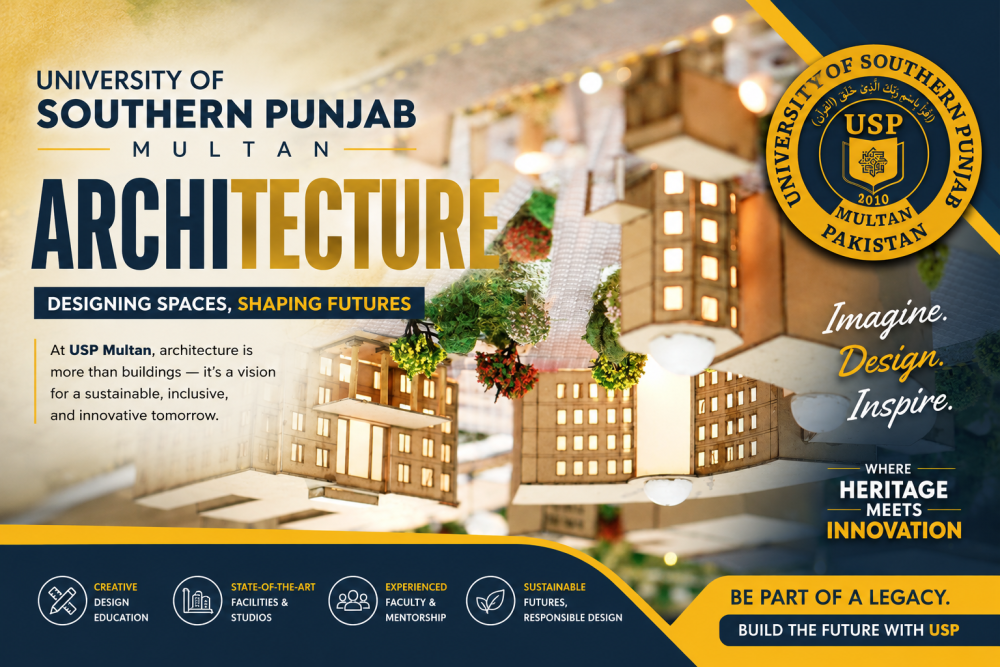
72/2026
Architecture academic programs support the United Nations Sustainable Development Goals (SDGs) by making the built environment's impact clear, inspiring the audience to see their role in shaping energy use, climate resilience, public health, urban sustainability, social equity, and economic development.
In the following, we discuss how architecture education aligns with major SDGs:
SDG 4 – Quality Education
Architecture programs promote interdisciplinary and experiential learning through design studios, fieldwork, digital modeling, sustainability labs, and community engagement projects. Students are trained in critical thinking, creativity, problem-solving, and ethical professional practice. Contemporary curricula also emphasize lifelong learning, digital architecture, Building Information Modeling (BIM), artificial intelligence in design, and green construction technologies.
SDG 9 – Industry, Innovation and Infrastructure
Architecture education contributes to innovation in sustainable infrastructure, resilient buildings, smart cities, and advanced construction systems. Programs introduce students to:
• Green building technologies
• Smart materials
• Parametric and computational design
• Earthquake-resistant structures
• Climate-responsive architecture
• Digital fabrication and 3D printing
Research and studio projects frequently focus on developing innovative, affordable infrastructure solutions for rapidly urbanizing societies.
SDG 11 – Sustainable Cities and Communities
This is perhaps the strongest alignment of architecture programs with the SDGs. Architecture students learn to design:
• Sustainable housing
• Inclusive public spaces
• Walkable communities
• Transit-oriented developments
• Heritage conservation projects
• Disaster-resilient settlements
Architecture schools increasingly encourage urban regeneration, affordable housing, and socially inclusive design approaches that improve the quality of urban life while reducing environmental degradation.
SDG 13 – Climate Action
Buildings account for a substantial proportion of global energy consumption and carbon emissions. Architecture programs, therefore, emphasize:
• Energy-efficient building design
• Passive cooling and heating
• Renewable energy integration
• Net-zero and carbon-neutral buildings
• Climate adaptation strategies
• Sustainable materials and lifecycle analysis
Students are trained to develop environmentally responsible structures capable of responding to climate change challenges, including heatwaves, flooding, water scarcity, and extreme weather events.
SDG 3 – Good Health and Well-being
Architecture directly influences physical and mental health through indoor air quality, lighting, ventilation, acoustics, accessibility, and public-space planning. Modern programs teach evidence-based design approaches that support:
• Healthy buildings
• Hospital and healthcare architecture
• Universal accessibility
• Biophilic design
• Mental wellness through spatial planning
Post-pandemic architectural education has also expanded its focus on resilient healthcare infrastructure and healthy urban environments.
SDG 7 – Affordable and Clean Energy
Architecture students are mainly trained in:
• Solar-responsive design
• Energy modeling
• Building performance simulation
• Renewable energy systems
• Sustainable mechanical integration
The objective is to reduce building energy consumption while promoting the use of affordable, clean energy in residential, commercial, and institutional buildings.
SDG 12 – Responsible Consumption and Production
Programs emphasize sustainable construction practices, including:
• Recycled and low-carbon materials
• Waste reduction
• Circular design principles
• Resource-efficient construction
• Adaptive reuse of buildings
Students learn how architecture can reduce material waste and environmental footprints throughout the lifecycle of buildings.
SDG 6 – Clean Water and Sanitation
Architectural education increasingly includes sustainable water management strategies such as:
• Rainwater harvesting
• Greywater recycling
• Water-sensitive urban design
• Efficient plumbing systems
• Flood mitigation planning
These concepts are particularly important in water-stressed regions, including South Asia and the Middle East.
SDG 10 – Reduced Inequalities
Architecture programs promote inclusive and equitable design by addressing:
• Accessibility for persons with disabilities
• Affordable housing
• Gender-sensitive urban spaces
• Community participation
• Rural and underserved populations
Community-based studios often engage students in designing for marginalized and economically disadvantaged communities.
SDG 15 – Life on Land
Landscape integration, ecological planning, biodiversity conservation, and environmentally sensitive urban expansion are incorporated into architectural pedagogy. Students explore how the built environment can coexist harmoniously with natural ecosystems.
Emerging Global Trends in SDG-Oriented Architecture Education
Leading architecture schools worldwide are transforming curricula to align with sustainability agendas through:
• Net-zero architecture studios
• Smart city laboratories
• Climate resilience research
• Sustainable urbanism programs
• Interdisciplinary collaborations with engineering and environmental sciences
• Community engagement and social-impact design
Institutions such as the Massachusetts Institute of Technology, Harvard Graduate School of Design, University College London, and the National University of Singapore are increasingly integrating sustainability metrics and climate-responsive design into architecture education.
Relevance for Pakistan and developing countries is strengthened by showing how architecture programs can directly address regional challenges like climate resilience, water scarcity, and urban growth, encouraging the audience to feel connected and motivated to contribute locally.
For countries like Pakistan, architecture programs can significantly contribute toward:
• Climate-resilient infrastructure
• Affordable housing development
• Sustainable urban expansion
• Heritage preservation
• Water-efficient construction
• Disaster risk reduction
Given rapid urbanization, population growth, environmental stress, and energy shortages, architecture graduates can play a transformative role in shaping sustainable and resilient communities aligned with national development priorities and the SDGs.
Several international bodies play a central role in the accreditation, validation, and quality assurance of architecture education programs worldwide. The most influential among them is the UNESCO-UIA Validation System, which establishes standards that promote SDG integration and curriculum quality. Programs validated under this system gain international recognition and demonstrate compliance with globally benchmarked educational standards, directly influencing how sustainability and SDGs are embedded in curricula.
Another major framework is the Canberra Accord, established in 2008 to recognize the substantial equivalency of accreditation systems in architectural education across different countries. Rather than accrediting schools directly, the Accord recognizes national accrediting agencies whose standards are considered comparable. Its signatories include bodies such as the National Architectural Accrediting Board (NAAB), the Canadian Architectural Certification Board (CACB), the Korean Architectural Accrediting Board (KAAB), and several others. The Accord facilitates international mobility of architecture graduates and strengthens mutual recognition of educational qualifications.
In the United States, the National Architectural Accrediting Board (NAAB) is the sole agency authorized to accredit professional architecture degree programs recognized for licensure. NAAB accreditation is widely recognized internationally and is used as a benchmark for curriculum quality, student performance criteria, and professional readiness.
Similarly, the Royal Institute of British Architects (RIBA) conducts international validation of architecture programs through peer-review mechanisms. RIBA validation is globally respected and focuses on academic standards, studio culture, sustainability, design innovation, and professional competencies. Many universities outside the United Kingdom seek RIBA validation to enhance international recognition and graduate mobility.
In Pakistan, the accreditation and regulation of architecture education programs are overseen by the Pakistan Council of Architects and Town Planners (PCATP), which was established under the Pakistan Council of Architects and Town Planners Ordinance 1983. PCATP is the statutory professional body responsible for accrediting Bachelor of Architecture (B.Arch.) and related planning programs offered by universities across the country. The council evaluates institutions based on curriculum quality, faculty qualifications, studio facilities, professional training, research environment, and compliance with national and international standards for architectural education. Graduates from PCATP-accredited programs become eligible for professional registration and licensing as architects in Pakistan. PCATP also collaborates with the Higher Education Commission (HEC) to ensure quality assurance and promote international recognition of Pakistani architecture qualifications.
The Bachelor of Architecture (B. Arch.) program at the University of Southern Punjab, Multan, Pakistan, is thoughtfully designed to align with the United Nations Sustainable Development Goals (SDGs) by cultivating architects who can shape sustainable, inclusive, technologically advanced, and environmentally responsible built environments. This program is accredited by the PCATP. The program integrates contemporary architectural education with climate-responsive design, sustainable urban planning, green construction technologies, energy-efficient building systems, heritage conservation, and community-centered development, thereby strongly supporting SDGs related to Quality Education, Sustainable Cities and Communities, Climate Action, Clean Energy, Responsible Consumption, Good Health and Well-being, and Reduced Inequalities. Through studio-based learning, research, digital innovation, and practical exposure, students are trained to design resilient infrastructure and socially inclusive spaces that address emerging global and regional challenges, including rapid urbanization, environmental degradation, housing shortages, and resource management. The program further emphasizes ethical professional practice, accessibility, ecological stewardship, and the sustainable use of materials, preparing graduates to contribute meaningfully to national development priorities and the global sustainability agenda outlined in the SDGs.
Architecture is no longer limited to aesthetics and construction; it has evolved into a multidisciplinary field central to sustainability, resilience, public health, environmental stewardship, and social development. Contemporary architecture programs, therefore, serve as powerful academic platforms for advancing the SDGs by preparing professionals to design sustainable cities, climate-responsive infrastructure, and inclusive human environments for future generations.