233/25 A Defining Moment for Pakistan, a Call for Character, Governance, and Courage in Higher Education - APSUP South Punjab Chapter Reports
Posted 10 months ago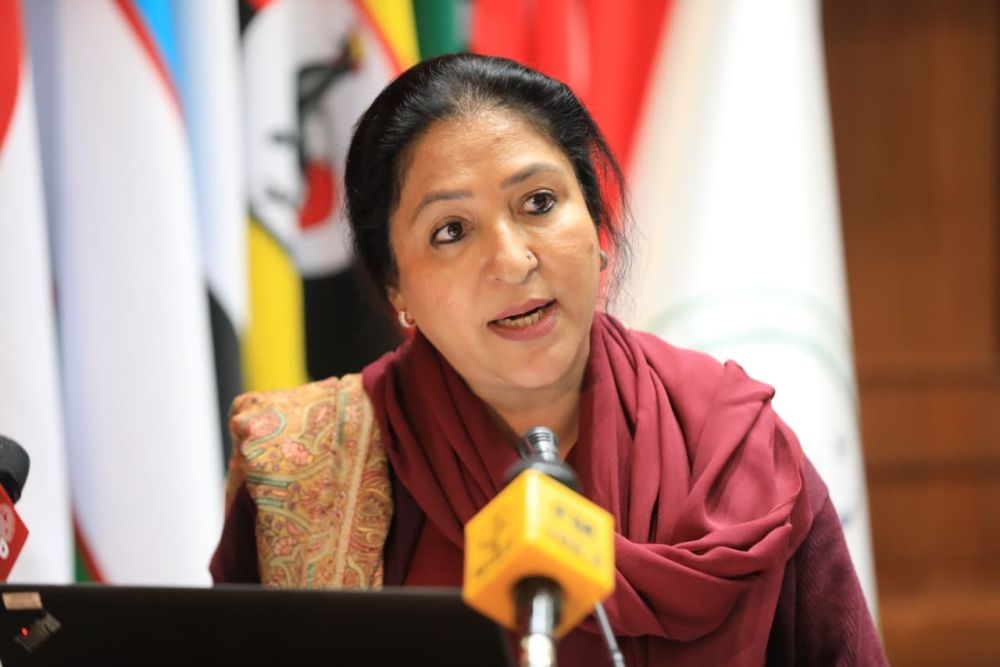
Minister of State, Ministry of Federal Education and Professional Training Speech is HERE
At the Sixth Rectors Conference organized by the Association of Private Sector Universities of Pakistan (APSUP) Ms. Wajiha Qamar, Minister of State for the Ministry of Federal Education and Professional Training, described higher education not merely as a public service, but as the very spine of Pakistan’s future. The conference was attended by both public and private sector universities leadership includin above two dozens international academic leaders from the Standing Committee for Scientific and Technological Cooperation (COMSTECH) countries.
Calling the gathering “a defining moment for the country,” Ms. Qamar described Pakistan’s youth demographics as both a historic opportunity and a profound responsibility. “With more than 60 percent of our population under the age of 30,” she said, “our universities are no longer just teaching spaces. They are nation-building institutions, custodians of talent, engines of innovation, and anchors of national stability.”
According to the Minister of State, Pakistan’s higher education sector is confronting deep challenges in governance, leadership, and reform, the very themes of the conference. Governance deficits, she noted.
“Modern Pakistan,” she declared, “needs a 21st-century development model, one that ensures autonomy with clear accountability, stability in leadership, and continuity of policy beyond political cycles.”
In a significant policy signal, Ms. Qamar outlined a shift from personality-driven institutions to system-driven institutions, anchored in data and evidence rather than anecdote. Through the Ministry’s technical arm, she said, Pakistan has already begun strengthening education data, learning analytics, and baseline systems and now intends to extend these capabilities deeper into the higher education sector to support evidence-based decision-making.
But her speech moved beyond systems into something more elemental: leadership itself.
“Leadership in higher education is not a position,” she said. “It is a responsibility shaped by artificial intelligence, shifting geopolitics, climate pressures, and economic transition. To cultivate such leaders, the Ministry is implementing targeted leadership development programs, mentorship schemes, and capacity-building workshops to prepare future university leaders who can navigate complex global challenges."
Outlining the Ministry’s reform priorities, Ms. Qamar emphasized curriculum modernization aligned with international benchmarks, industry needs, and emerging technologies, ensuring graduates are equipped with relevant skills. This alignment is vital for enhancing employability and fostering innovation within Pakistan's economy.
Her assurances extended beyond rhetoric. “We stand ready,” she told the audience, “to work with APSUP, COMSTECH, provincial authorities, and every partner willing to strengthen governance, broad oversight, and national coordination.”
Toward the close, her vision grew explicitly generational. Universities, she said, must now produce graduates who do not merely seek jobs, but create graduates trained in critical thinking, grounded in research quality, and nurtured in inclusive, progressive, and safe learning environments.
“Pakistan’s higher education future will not be shaped by policies alone,” she concluded. “It will be shaped in your classrooms, your laboratories, your decisions, and our collective courage.”
As the hall rose in applause, the message lingered: if universities transform, Pakistan transforms with them. And in a country standing at the edge of a vast demographic surge, the stakes could scarcely be higher.