AI’s New Watchdog: A Free Tool That Helps Scientists Avoid Questionable Journals
Posted 3 months ago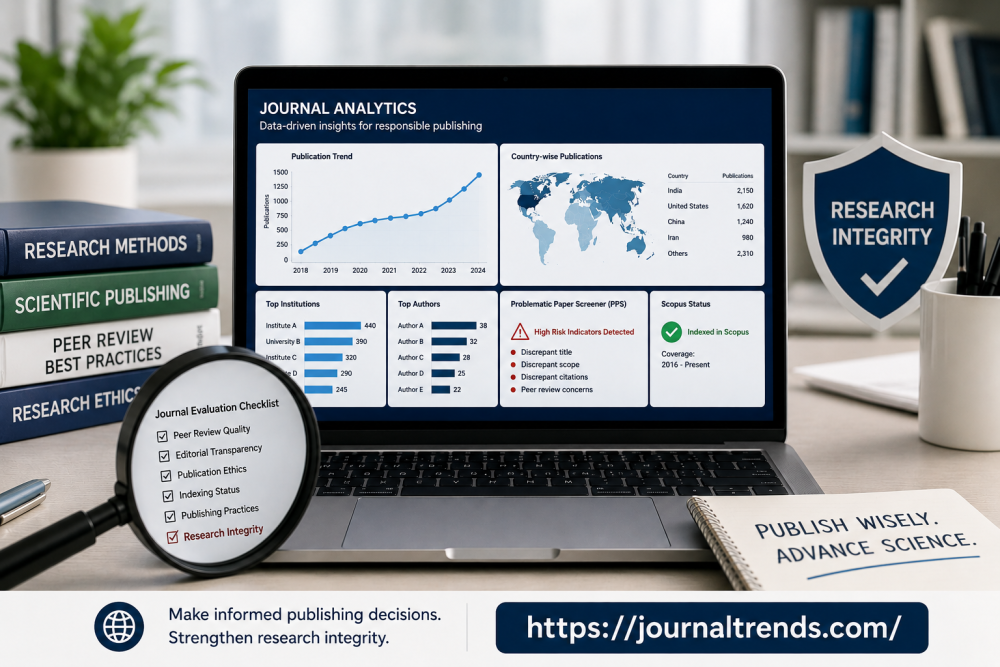
91/2026
According to an article published in Nature Journal, by analyzing publishing patterns, a new platform could protect researchers from predatory journals and strengthen research integrity worldwide.
In academic publishing, choosing the right journal can be almost as challenging as conducting the research itself. Every year, thousands of scientists, especially early-career researchers, receive flattering invitations from journals promising rapid publication, low rejection rates, and global visibility. Unfortunately, not all of these journals are trustworthy.
A new free online platform, Journal Trends, aims to change that. By analyzing publishing patterns and journal behavior, the tool helps researchers identify potentially problematic journals before submitting their hard-earned work. According to a recent Nature report, the platform could become a valuable ally in the fight against low-quality and predatory publishing.
The Growing Problem of Questionable Journals
Scientific publishing rests on trust. Researchers conduct studies, experts review the work, and journals ensure that only reliable findings enter the scientific record. However, the rise of predatory and low-quality journals has complicated this process.
These journals often prioritize profit over quality. They may charge publication fees while offering little or no meaningful peer review. Some publish papers within days, making it nearly impossible to evaluate the research properly. As a result, flawed or even fraudulent studies can enter scientific literature.
For researchers under pressure to publish, distinguishing between reputable and questionable journals can be challenging. A journal may appear professional on the surface while concealing problematic practices behind an attractive website and aggressive marketing.
A Data-Driven Solution
Journal Trends approaches the problem differently. Rather than relying on reputation alone, it examines patterns in journal publishing behavior.
Think of it as a health-monitoring system for academic journals. Just as physicians assess a patient's health by looking at multiple indicators, the platform analyzes various signals that may indicate whether a journal is operating responsibly.
By tracking trends over time, the tool can highlight unusual changes that warrant attention. For example, sudden surges in publication volume, unusual citation patterns, or dramatic shifts in editorial practices may serve as warning signs.
The goal is not to block journals but to provide researchers with information to help them make informed decisions.
Why This Matters for Young Researchers
For established scientists, choosing a journal is often guided by years of experience. But for graduate students, postdoctoral fellows, and early-career academics, the publishing landscape can be confusing and overwhelming.
A poor publishing decision can have lasting consequences. Publishing in a journal with questionable practices may reduce a study's visibility, damage professional credibility, and make future collaborations more difficult.
A tool that provides objective insights could therefore be especially valuable for researchers early in their careers.
Helping Research Integrity Experts
The benefits extend beyond authors.
Research-integrity specialists and scientific sleuths increasingly monitor the scholarly literature for signs of misconduct, such as paper mills, manipulated peer review, and suspicious publication activity. Journal Trends could help these experts identify journals that warrant closer scrutiny.
Rather than investigating journals one by one, integrity experts may use data analytics to identify emerging problems earlier and more efficiently.
In many ways, the platform represents a shift from reactive to proactive oversight.
The Rise of Research Analytics
The development of Journal Trends reflects a broader transformation in science. Researchers increasingly use large datasets and artificial intelligence to understand the scientific ecosystem.
Just as scientists analyze genomes, climate records, or astronomical observations, they are now analyzing the behavior of scientific publishing. Massive databases of articles, citations, authors, and journals offer new opportunities to detect patterns that would be invisible to individual observers.
This emerging field, sometimes called the “science of science,” is helping researchers understand how knowledge is created, shared, and sometimes distorted.
Technology as a Guardian of Trust
Scientific progress depends on public confidence. During global challenges, including pandemics, climate change, and emerging technologies, society relies on researchers to provide accurate, trustworthy information.
Tools like Journal Trends are part of a growing effort to strengthen trust. By making journal behavior more transparent, they help researchers navigate an increasingly complex publishing environment and promote higher standards across the scientific community.
No software can eliminate poor publishing practices. Human judgment, ethical standards, and rigorous peer review remain essential. However, intelligent tools can provide an important first line of defense.
As scientific publishing continues to expand, researchers face a growing challenge: distinguishing credible journals from those that merely mimic legitimacy. Journal Trends offers a promising solution by transforming publishing data into actionable insights.
For scientists, it could become a trusted guide. For research-integrity experts, it may serve as an early-warning system. And for the broader scientific community, it represents another step toward a more transparent, accountable, and trustworthy research ecosystem.
In an era when information travels faster than ever, safeguarding the quality of science is no longer just about conducting good research; it is also about ensuring that good research finds the right home.