Where Science Meets the Farm and the Future: Academic Leaders Call for a New Era of Collaboration
Posted 1 month ago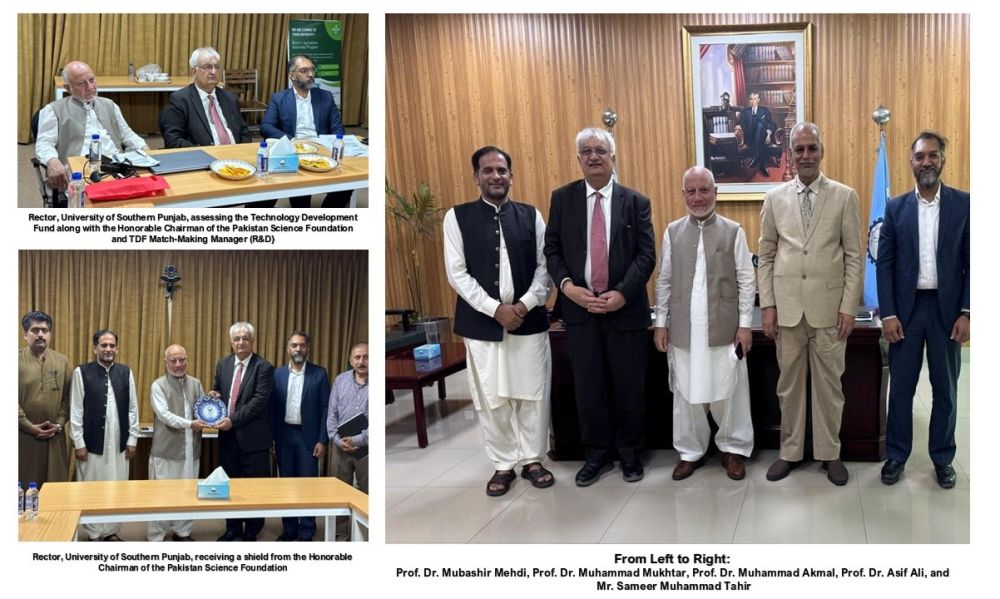
204/2026
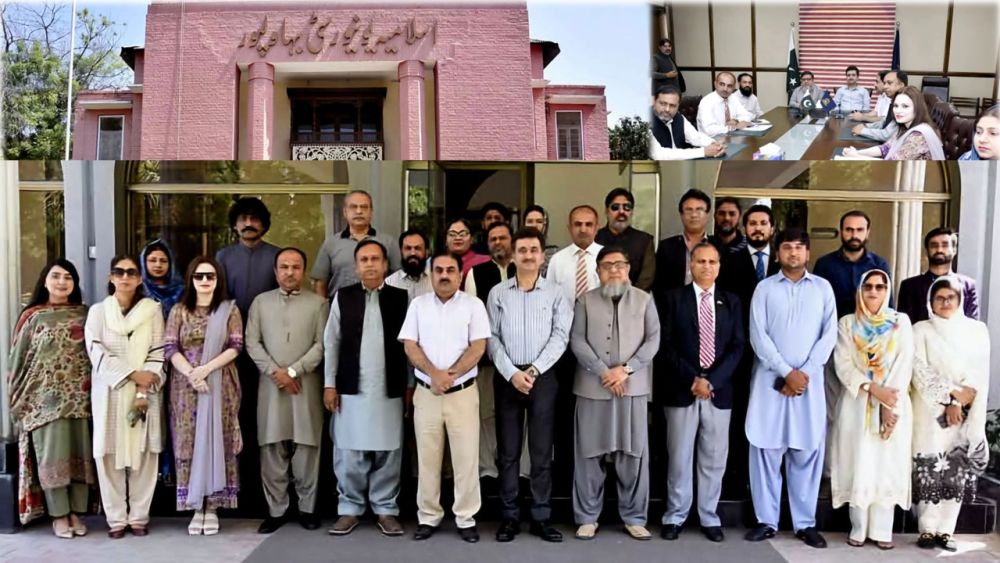
The Pakistan Science Foundation (PSF) Chairman and the University of Southern Punjab, Multan (USP) Rector visited Muhammad Nawaz Shareef University of Agriculture, Multan (MNSUAM) and praised translational research, food innovation, and a shared vision for regional resilience.
The future of science, agriculture, and regional development may depend less on what institutions can accomplish alone and more on what they can achieve together. That idea came into focus during a joint visit to the Muhammad Nawaz Shareef University of Agriculture, Multan (MNSUAM), by Prof. Dr. Mohammad Akmal, Chairman of the Pakistan Science Foundation (PSF), and Prof. Dr. Muhammad Mukhtar, Rector of the University of Southern Punjab (USP), Multan.
The two academic leaders met with Prof. Dr. Asif Ali, T.I., Vice Chancellor of MNSUAM. They visited the university's research laboratories and reviewed work by several research groups in areas directly related to agriculture, food security, climate resilience, and regional development.
Mr. Sameer Muhammad Tahir of the Higher Education Commission of Pakistan, along with senior university officials, also joined the visit.
What emerged was more than a tour of laboratories. It was a conversation about how research can move beyond university walls and become part of the country's response to some of its most pressing challenges.
Both Prof. Dr. Mohammad Akmal and Prof. Dr. Muhammad Mukhtar expressed appreciation for the quality of translational research at MNSUAM, particularly the work with the potential to move from the laboratory to practical applications that can benefit communities and strengthen Pakistan's resilience to climate change.
From Farm to Fork
Prof. Dr. Mohammad Akmal particularly appreciated the university's work in food preservation technologies and its efforts to foster innovation across the entire farm-to-fork chain. This emphasis is significant. In a country where agricultural productivity, food losses, climate pressures, and food security are closely intertwined, technologies that preserve food and improve its journey from producer to consumer can have an impact far beyond the laboratory.
The PSF Chairman commended MNSUAM's leadership for fostering an environment in which research is increasingly oriented toward practical national needs. The visit also underscored a broader principle: research becomes truly transformative when scientific knowledge is translated into solutions people can use.
A Partnership Beyond Institutional Boundaries
For Professor Dr. Muhammad Mukhtar, the opportunity also offered a chance to bring together public- and private-sector universities to develop South Punjab and the wider region. He proposed greater cooperation among academic institutions, arguing that universities should increasingly view one another not as isolated entities but as partners with complementary strengths. According to him, MNSUAM and USP have considerable common ground, and each institution possesses distinctive expertise from which the other can learn. Such collaboration, he suggested, could create a stronger academic ecosystem that connects research, innovation, skills, and entrepreneurship with the region's economic and social needs.
Recognition for the Life of Academic Leadership
The visit also became an opportunity to recognize Professor Dr. Muhammad Mukhtar's broader contribution to higher education in Pakistan.
Prof. Dr. Mohammad Akmal praised his efforts to raise academic standards nationwide. He highlighted his role in establishing the country's first skills university in the federal capital, describing the contribution as one that would leave a lasting mark on Pakistan's higher-education landscape.
Prof. Dr. Asif Ali and the PSF Chairman also acknowledged Professor Dr. Mukhtar's mentoring role in the careers of numerous academic leaders at universities across Pakistan and internationally.
The recognition culminated in Prof. Dr. Mohammad Akmal presenting an appreciation shield to Prof. Dr. Muhammad Mukhtar, marking the occasion not merely as an institutional visit but as a tribute to academic leadership and mentorship.
The Bigger Idea
The visit carried a quiet but consequential message.
Pakistan's scientific future will not be built by laboratories working in isolation. Nor will regional development come from universities operating within institutional boundaries.
It will require public and private universities, scientists, academic leaders, policymakers, and industry to work across traditional lines, share expertise, develop technologies, and ensure research reaches the people who need it.
At MNSUAM, the conversation began with agriculture and food preservation. It expanded toward climate resilience, academic cooperation, and regional development.
And perhaps that is where the visit's significance lies: the most valuable research may not be the research that stays in a laboratory, but the research that finds its way into a field, a factory, a kitchen, and ultimately into people's lives.