What is the number of publication requirements for a university to be included in the Times Higher Education (THE) World University Rankings?
Posted 8 months ago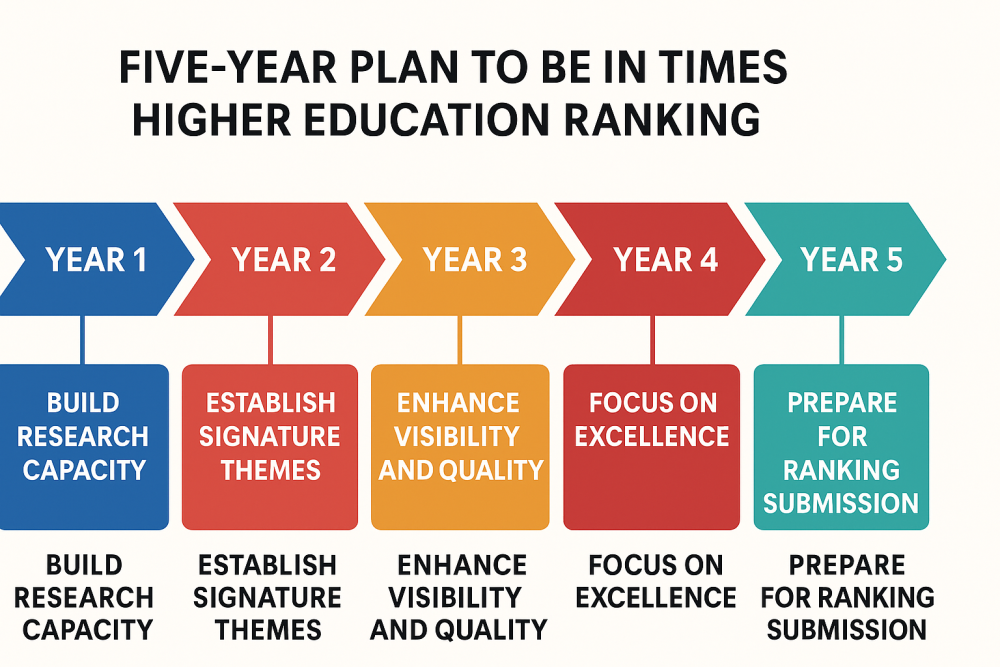
236/25
To be included in the Times Higher Education (THE) World University Rankings, there is a specific minimum research publication requirement. It’s not just a single number of papers each year; it’s based on research output over multiple years and other conditions.
📊 Minimum Research Publication Requirement (Overall World Rankings)
To be considered for the overall World University Rankings:
- A university must have published at least 1,000 relevant research publications over the most recent five-year period that THE examines.
- Within that period, it must also have a minimum of about 100 publications in each year of the five-year period.
This requirement ensures sustained research output rather than sporadic or one-off bursts of publication.
📆 Example (Based on 2026 Methodology)
For the THE World University Rankings 2026, this means:
- Universities need more than 1,000 publications from 2020 to 2024 (about 200 papers per year, but the strict minimum is around 100 each year to reach 1,000+).
- • A minimum of 100 publications per year was required over those five years.
If a university does not meet this threshold, it may be classified as a “reporter” (i.e., data contributor) but will not receive a full ranking.
📌 Why This Matters
Meeting this publication threshold is crucial for a university to qualify for THE’s global rankings because one of THE’s five core pillars is research performance (volume, reputation, influence, quality, and citations). Without a minimum number of papers published, a university cannot be accurately evaluated on these research metrics.
🧠 Subject Rankings vs. Overall Rankings
If a university is targeting subject-specific rankings (such as Engineering or Life Sciences), the publication thresholds are lower and specific to each discipline (for example, 500 or fewer papers over five years, depending on the subject). However, these thresholds apply only to individual subject lists, not the overall global ranking.
Summary:
🔹 Overall THE World University Rankings: At least ~1,000 research publications over five years (about ~100 per year).
🔹 Subject rankings: Lower publication thresholds which vary by discipline.
If you’re developing a research strategy to improve your global ranking prospects, concentrating on consistent, high-quality publications indexed in major bibliometric databases (e.g., Scopus) is essential.
Research Papers Quality Matters
When Times Higher Education (THE) discusses the “quality of papers,” it does not refer to simply publishing in any journal or increasing quantity. Quality is assessed using objective, data-driven indicators, primarily based on citations and impact, rather than relying on journal labels alone.
Below is a clear, practical explanation 👇
📌 What Does “Quality of Papers” Mean in Times Higher Education?
THE evaluates research quality primarily through citation impact, using data from Scopus.
1️⃣ Citations (Most Important Factor)
- Other researchers widely cite quality papers.
- The uses of Field-Weighted Citation Impact (FWCI):
- FWCI = 1.0 → world average
- FWCI > 1.0 → above-average quality
- FWCI < 1.0 → below-average impact
📌 A paper cited more than the global average for its field is regarded as high quality.
2️⃣ Field-Normalized Impact (Fair Comparison)
- A medical paper and a humanities paper are not compared directly.
- • Each paper is evaluated within its discipline.
- • This approach safeguards universities that excel in fields with low citation rates (e.g., social sciences, humanities).
3️⃣ Original Research Only
High-quality papers must be:
- ✔ Original research articles
- ✔ Published in peer-reviewed journals
- ❌ Editorials, opinion pieces, news items, and short notes are excluded
(Systematic reviews are acceptable if scholarly.)
4️⃣ International Visibility
Papers score better if they:
- Are read and cited internationally
- Have international co-authors
- Address globally relevant problems
📌 Local or regional journals with limited readership usually score low.
5️⃣ Sustained Quality (Not One-Year Spike)
THE evaluates:
• 5 years of data
• Consistent citation performance over time
📌 One highly cited paper does not make up for years of weak output.
❌ What Does NOT Count as Quality?
- Publishing numerous papers in predatory or low-impact journals
- • Papers that receive few or no citations
- • “Salami slicing” (dividing research into many small, weak papers)
- • Conference papers (in most fields)
🧠 Simple Rule of Thumb for Universities
One well-cited paper has more value than ten uncited papers.
🎯 Practical Guidance for Universities (Especially in Pakistan)
To improve the research quality score:
- • Focus on fewer but stronger papers
- • Publish in Scopus-indexed journals
- • Promote international collaboration
- • Address global problems, not just local issues
- • Develop a citation culture (mentorship, visibility, ethics)
📌 In One Line
Quality papers in THE rankings are peer-reviewed, internationally visible, and cited more than the world average in their field.
🎯 5-Year Research Quality Roadmap (University of Southern Punjab Model)
YEAR 1 – Foundation & Governance (Reset the Culture)
1️⃣ Research Governance
- Establish a Research Quality Council (RQC) chaired by the VC/Rector.
- Define clear KPIs aligned with Scopus and FWCI > 1.0.
- Approve a Research Ethics & Publication Integrity Policy.
2️⃣ Baseline Audit
- Map:
- Publications (last 5 years)
- Citation impact (FWCI, h-index)
- Active faculty vs dormant faculty
- Identify Top 20% productive researchers (future mentors).
3️⃣ Smart Incentives (Quality-Linked)
- Incentives only for:
- Q1/Q2 journals
- FWCI > world average
- International co-authored papers
- Remove incentives for predatory or uncited publications.
4️⃣ Capacity Building
- Mandatory training:
- Research design
- Academic writing
- Journal targeting & ethics
- Appoint Research Mentors department-wise.
📌 Outcome: Culture shift from counting papers → valuing impact
YEAR 2 – Focus & Collaboration (Build Strengths)
1️⃣ Identify Signature Research Themes
Select 5–7 institutional themes, aligned with:
- National priorities
- UN SDGs
- Faculty strengths
Examples:
- Climate resilience
- Public health & nutrition
- AI & data sciences
- Renewable energy
- Education & skills development
2️⃣ Launch Research Clusters
- Each cluster must include:
- Senior mentor
- Mid-career faculty
- PhD/MS scholars
- Targets:
- 3–5 high-quality papers/year per cluster
3️⃣ Internationalization
- MoUs with research-active universities (not ceremonial MoUs).
- Visiting scholar program (short-term, output-driven).
- Joint supervision & joint publications.
4️⃣ Internal Competitive Grants
- Small grants (seed funding)
- Funding released in milestones, not lump sums.
📌 Outcome: Concentrated, collaborative research output
YEAR 3 – Visibility & Quality Control (Move Global)
1️⃣ Publication Quality Gatekeeping
- Pre-submission review committee:
- Journal quality check
- Scope & relevance
- Ethical compliance
2️⃣ Research Visibility Office
Dedicated team for:
- ORCID & Scopus profile cleaning
- Google Scholar optimization
- Press releases for major papers
- Policy briefs & media outreach
3️⃣ Citation Strategy (Ethical)
- Promote legitimate self-archiving
- Encourage review papers in strong areas
- Faculty reading & citation circles
4️⃣ Doctoral Productivity
- Each PhD:
- Minimum 1–2 Scopus-indexed papers
- Thesis-by-publication encouraged.
📌 Outcome: Rising citations & international recognition
YEAR 4 – Excellence & Selectivity (Quality Over Quantity)
1️⃣ Elite Researcher Track
- Identify top 10–15% researchers
- Reduced teaching load
- Priority funding & travel support
2️⃣ Flagship Outputs
- Target:
- High-impact journals
- Multicenter international studies
- Institutional authorship branding standardized.
3️⃣ External Funding Push
- National grants
- International calls
- Industry-linked projects
4️⃣ Stop Low-Value Publishing
- No promotion credit for:
- Unindexed journals
- Zero-citation papers after 2 years
- Annual research performance ranking of departments.
📌 Outcome: Institutional reputation for seriousness & rigor
YEAR 5 – Sustainability & Rankings Readiness
1️⃣ Rankings Optimization
- Verify eligibility thresholds:
- ≥1,000 publications (5 years)
- Strong FWCI
- Data validation for:
- THE
- QS (if desired)
2️⃣ Institutional Research Journal (Optional)
- International editorial board
- Scopus/WoS pathway
- Focus on niche strength areas.
3️⃣ Knowledge Translation
- Policy impact reports
- Industry adoption
- Community engagement documentation
4️⃣ Long-Term Talent Strategy
- Recruit:
- Offering Post-docs
- Highly cited researchers
- Succession planning for research leadership.
📌 Outcome: Self-sustaining research ecosystem