USP Graphic Design Graduates Turn Creative Ideas into Commercial Opportunities at the Final Degree Show 2026
Posted 1 day ago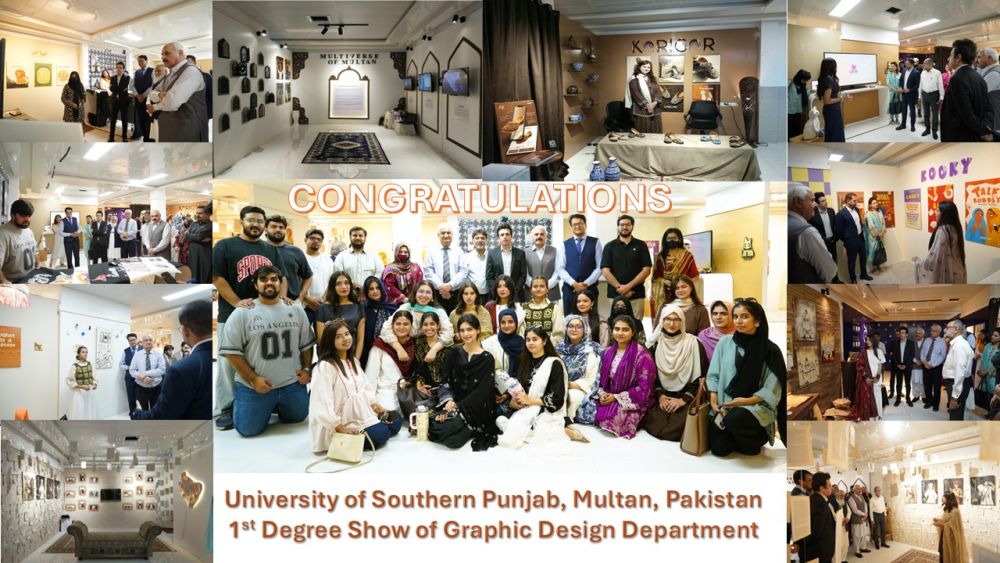
241/2026
Innovative student projects blend cultural heritage, digital technology, and entrepreneurial vision, reinforcing the University of Southern Punjab’s commitment to producing industry-ready graduates and future business creators.
The Department of Graphic Design at the University of Southern Punjab (USP), Multan, Pakistan, has showcased the creativity, professional skills, and entrepreneurial potential of its graduating class of 2022-2026 through an impressive Final Degree Show 2026, featuring ten innovative projects that translate artistic concepts into viable commercial ventures.
The exhibition showed that graphic design education extends beyond visual aesthetics to include brand development, digital innovation, cultural preservation, product design, animation, storytelling, and business creation. The projects reflected a forward-looking approach to creative education, equipping graduates to explore opportunities in the creative economy, launch independent ventures, and contribute to Pakistan’s growing digital and design industries.
A defining feature of the exhibition was the commercial potential of the students’ work. Rather than limiting their efforts to conventional academic assignments, the graduates developed concepts with clearly defined audiences, potential customers, and possible pathways to market.
Among the prominent projects, “Karigar” by Zainab Furqan is an innovative mobile application concept designed to preserve and promote Multan’s traditional hand-embroidered khussa. By combining heritage-inspired designs with augmented reality (AR) try-on technology, the project enables customers to explore and personalize footwear digitally. Its potential applications in e-commerce, traditional crafts, and national and international retail markets demonstrate how technology can create new opportunities for local artisans.
“IQLIM,” by Sarim Imran, presents a luxury streetwear brand built around four creative volumes and a unified visual identity. With its tagline, “Own Your Realm,” the project explores the commercial space between mass-market streetwear and premium fashion, showing how original design and strategic branding can build a distinctive consumer brand.
Similarly, Rohma Komal's “Handwoven Muse” transformed traditional handicraft inspiration into a contemporary crochet brand. By reimagining heritage motifs such as Ajrak through handmade products and a dedicated online presence, the project offers opportunities in e-commerce, slow fashion, and the growing market for distinctive, handcrafted products.
Celebrating Multan’s Cultural Identity Through Design – USP Supporting Communities
The exhibition also underscored the role of creative education in preserving and promoting Southern Punjab's cultural identity.
“Multiverse of Multan” by Fatima Maryam used visual storytelling to document the city’s cultural richness, highlighting the talents of people associated with Qawwali, Sufi dance, Shehnai and Bansuri music, and Kashi Kari. Blending documentary footage with animated illustrations inspired by Multani motifs, the project has potential applications in tourism promotion, museums, cultural exhibitions, and digital media campaigns.
“Khat Naqsh-e-Kashi” by Navera Zaka explored the development of an Urdu typeface inspired by Multan’s architecture, calligraphic traditions, craftsmanship, and everyday visual culture. Its potential commercial applications include publishing, branding, signage, and cultural communication, demonstrating how regional identity can be embedded directly in contemporary typography.
Through “Illustrated Story of Ahmad Khan Kharal,” Marwa Nadeem brought a lesser-known Punjabi folk hero and his resistance to British rule into a visual narrative designed to engage younger audiences. The project offers opportunities for illustrated book series, educational materials, museum displays, and cultural merchandise.
Meanwhile, Mahnoor Sheik presented concept art for “The Gates of Multan,” a time-travel adventure set in 1750s Multan. Inspired by the city's historic gates and heritage, the concept could be developed into a webcomic, an interactive game, educational content, and associated merchandise.
Together, these projects demonstrate that graphic design can be a powerful medium for cultural preservation while opening new possibilities for heritage-based creative enterprises.
Digital Storytelling, Typography and Emerging Creative Markets
Other projects illustrated the breadth of opportunities available to graduates in the digital content and design fields.
“Lamha Studio - Two Bowls” by Hafsa Javed explored a low-stimulation animation studio concept centered on calm, meaningful storytelling. Its potential commercial applications include short films, branded content, and digital media for audiences and organizations seeking more mindful visual experiences.
“Kooky Display Font” by Mahim Leghari translates the familiar human behavior of procrastination into an experimental display typeface featuring irregular letterforms and exaggerated proportions. The concept could be used in advertising, packaging, editorial design, and brand communication.
“Kahani Ghar – Sher aur Chuha” by Tayyaba reimagines the classic story of The Lion and the Mouse as an illustrated Urdu digital storybook featuring a handmade paper-cut aesthetic, subtle animation, and Urdu narration. The project offers potential for children's digital publishing, educational resources, and Urdu-language storytelling platforms.
USP’s Commitment to Entrepreneurship and Industry-Relevant Education
The Final Degree Show reflects the University of Southern Punjab’s commitment to strengthening the connection between higher education, practical skills, entrepreneurship, and the needs of the professional world.
By encouraging students to develop comprehensive creative concepts, establish visual identities, explore digital platforms, and identify commercial applications, USP helps graduates see how their knowledge can translate into professional opportunities and viable business ideas.
The projects also provide a foundation for future engagement with entrepreneurs, investors, manufacturers, cultural organizations, technology companies, and industry partners. With appropriate mentorship, market validation, intellectual property protection, and business development support, several concepts could advance toward commercial products, services, or start-ups.
The exhibition reinforces an important principle of contemporary higher education: graduates should be prepared not only to seek employment but also to create opportunities through innovation, entrepreneurship, and professional creativity.
Building the Next Generation of Creative Entrepreneurs
The Final Degree Show 2026 stands as a testament to creative education's potential to generate cultural, social, and economic value. From digitally enhanced traditional footwear and contemporary fashion brands to animated Urdu stories, original typefaces, and interactive heritage concepts, the graduating students demonstrated that design can be both an artistic pursuit and a foundation for enterprise.
For the University of Southern Punjab, the exhibition marks an important step toward an educational model that values creativity, practical competence, innovation, and entrepreneurship alongside academic achievement.
As these graduates enter their professional lives, their projects convey a broader message for Pakistan’s higher education sector: the true impact of education lies not only in the degrees students earn but also in the ideas they develop, the enterprises they build, and the opportunities they create for others.
The University of Southern Punjab congratulates the graduating class of 2022–2026 and wishes them success as they transform their creative potential into professional achievement and sustainable commercial ventures.