University of Southern Punjab Multan Rector Commends HEC Chairman's Vision for AI-Driven Higher Education
Posted 3 months ago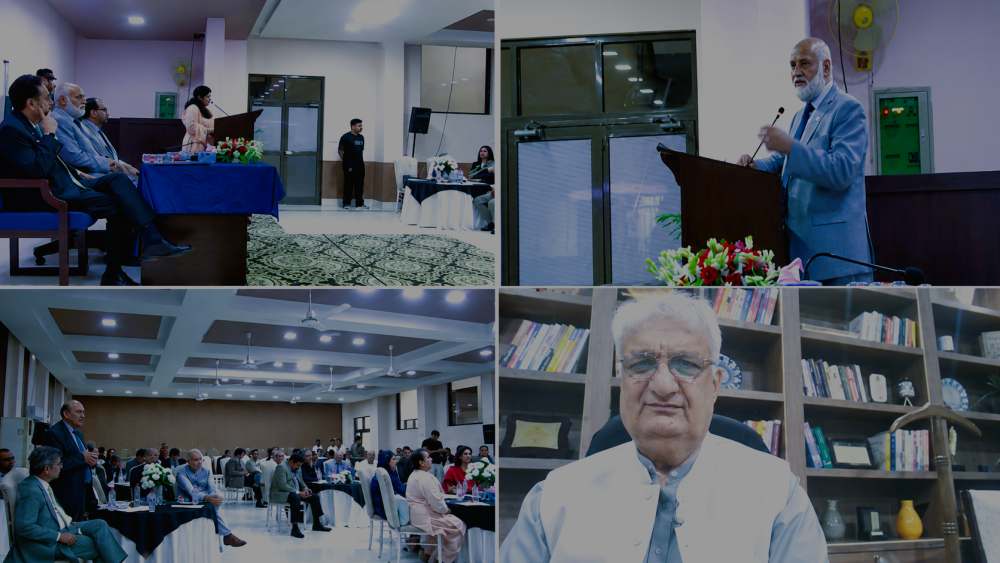
155/2026
The Higher Education Commission (HEC) of Pakistan convened a Vice Chancellors' Conference to discuss the future of higher education, with a focus on artificial intelligence (AI), outcome-based education (OBE), international collaboration, and preparing graduates for an AI-driven world.
The Vice Chancellor of UET Lahore, Prof. Dr. Shahid Munir, praised the visionary leadership of Prof. Dr. Niaz Ahmad Akhtar, Chairman of HEC, and noted that UET has developed a comprehensive AI curriculum and is willing to share it with other universities. He emphasized that teachers are now facilitators of learning and that integrating AI into education has become a national necessity.
Dr. Muhammad Ali, Vice Chancellor of the University of the Punjab, also praised the HEC initiative, noting that having a former Vice Chancellor as HEC Chairman offers valuable insight into the challenges and opportunities facing universities.
In his keynote address, Prof. Dr. Niaz Ahmad Akhtar highlighted the progress of Pakistani universities in rankings, research, and student services. He encouraged institutions to pursue dual- and double-degree programs, adopt AI across teaching, research, and administration, and equip graduates with future-ready skills. Citing AI initiatives at the Governor's House Sindh and collaborations with nearly 30 Chinese universities, he emphasized the importance of international partnerships and technological transformation.
During the interactive session, Prof. Dr. Muhammad Mukhtar, Rector of the University of Southern Punjab, Multan, praised the HEC Chairman's forward-looking vision. Drawing on his teaching experience in 27 countries, he noted that USP is among Pakistan's pioneering universities implementing Outcome-Based Education (OBE) and is currently celebrating OBE Week to strengthen faculty understanding and practical implementation of OBE.
Prof. Mukhtar also highlighted his participation in the international Bridging Innovation and Learning in TVET (BILT) initiative, which includes China, France, Germany, and other countries. He noted that the BILT framework offers a robust model for aligning technical and vocational education with the emerging demands of artificial intelligence and the future of work.
The conference concluded with a collective commitment by university leaders to accelerate AI integration, strengthen global academic partnerships, and promote outcome-based education to prepare graduates for the rapidly evolving knowledge economy.