Skill Our Future: Building a World of Opportunity for Youth
Posted 5 months ago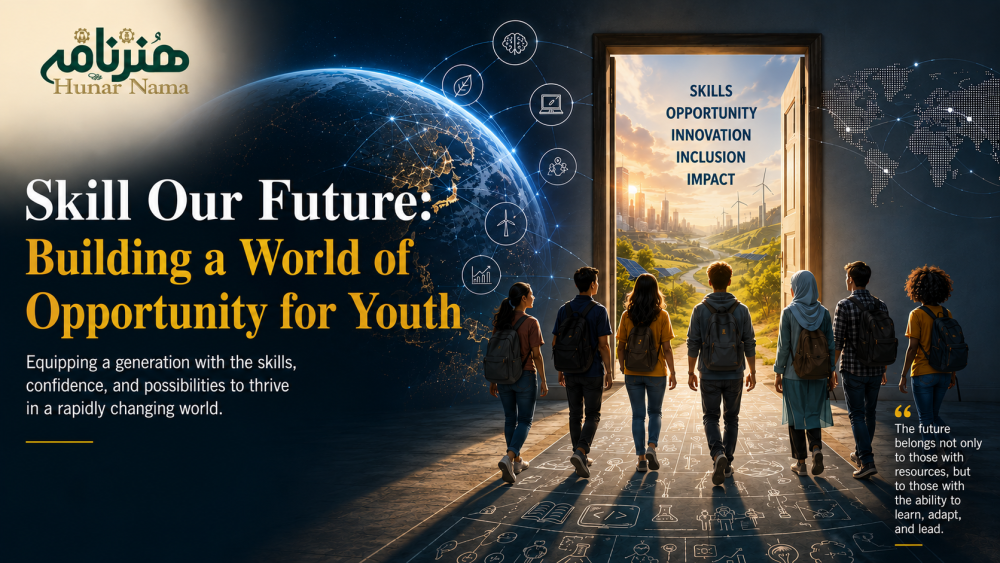
73/2026
Skill Our Future, a United Nations Development Program-backed initiative, seeks to equip underserved youth across Asia and the Pacific with the digital, employability, entrepreneurial, and green skills required for an unforgiving new economy. At a moment when artificial intelligence, automation, and climate transitions are reshaping the global labor market faster than governments can adapt, Skill Our Future is more than an online learning platform. It is an argument that opportunity in the 21st century must not remain the privilege of geography, wealth, or elite institutions.
Around the world, millions of young people are graduating with an undefined future. Degrees no longer guarantee employment. Traditional career pathways are dissolving. Algorithms and automation are transforming entire industries, while some educational systems continue teaching many students as though the industrial age never ended.
An unfortunate gap is widening between the pace of technological change and society's ability to prepare its citizens for it. Nations that fail to close this gap risk producing not merely unemployed graduates, but a generation alienated from the future itself.
Launched under the United Nations Development Program’s Youth Empowerment Portfolio in Asia and the Pacific, the initiative aims to democratize access to future-oriented skills through partnerships, digital learning, mentorship, and employability training. It focuses on marginalized and underserved youth populations who are often excluded from the innovation economy despite their immense untapped potential. Policymakers can support integration by aligning national strategies with these objectives to maximize impact.
At first glance, the initiative may seem to belong to the growing ecosystem of digital learning platforms. But that interpretation underestimates its broader implications.
Skill Our Future is not merely about teaching technical skills. It is about redefining preparedness itself.
Connectivity alone isn't enough; fostering capability through inclusive digital and entrepreneurial education can inspire hope that all youth can access opportunities.
A smartphone alone cannot create opportunities.
A student in rural South Asia may have internet access yet still be excluded from global knowledge networks, mentorship ecosystems, and employability pathways that determine economic mobility in the modern world. The result is a silent inequality far more consequential than income disparity alone: the inequality of future readiness.
The future labor market will reward individuals who can adapt continuously, communicate effectively, solve complex problems, and navigate technological systems with confidence. Technical expertise will matter, but so will resilience, creativity, leadership, and collaboration.
What distinguishes Skill Our Future is its recognition that employability is not a single skill but an ecosystem of skills. Digital literacy, entrepreneurship, storytelling, teamwork, environmental awareness, leadership, and adaptability are treated not as separate categories but as interconnected capacities required to survive in a rapidly transforming economy.
This philosophy is remarkably timely.
The era of linear careers is ending. Workers will increasingly move across industries, technologies, and even entirely new professions that do not yet exist. In this environment, the ability to learn continuously may become more valuable than any individual qualification.
This is particularly important for countries with large youth populations. Demographic growth can either become an economic strength or a source of social instability, depending on whether young people are equipped to participate meaningfully in emerging economies.
Yet another reason Skill Our Future deserves attention is that it challenges the growing global pessimism about globalization and technological change. Across many regions, young people increasingly feel that the systems shaping the future were designed without them in mind. Economic growth exists, but opportunity remains concentrated among those advantages.
Skills-based empowerment
When a young woman from an underserved community gains digital fluency, entrepreneurial confidence, and leadership skills, it sparks hope for community-wide change and social mobility.
Policymakers should recognize that digital skills initiatives are essential components of national infrastructure, vital for future competitiveness and social equity.
In the industrial era, roads and railways connected economies. In the knowledge era, skills ecosystems will determine whether nations remain competitive or fall behind.
The global economy is no longer waiting for educational systems to reform gradually. Transformation is already underway.
Establishing clear metrics and evaluation frameworks will build confidence in Skill Our Future's impact and motivate ongoing stakeholder support.
Because somewhere tonight, a young person with extraordinary potential is deciding whether the future still belongs to them, and initiatives like Skill Our Future may determine that answer.