From Workshop to Workforce: How Germany Trains a Nation to Work
Posted 7 months ago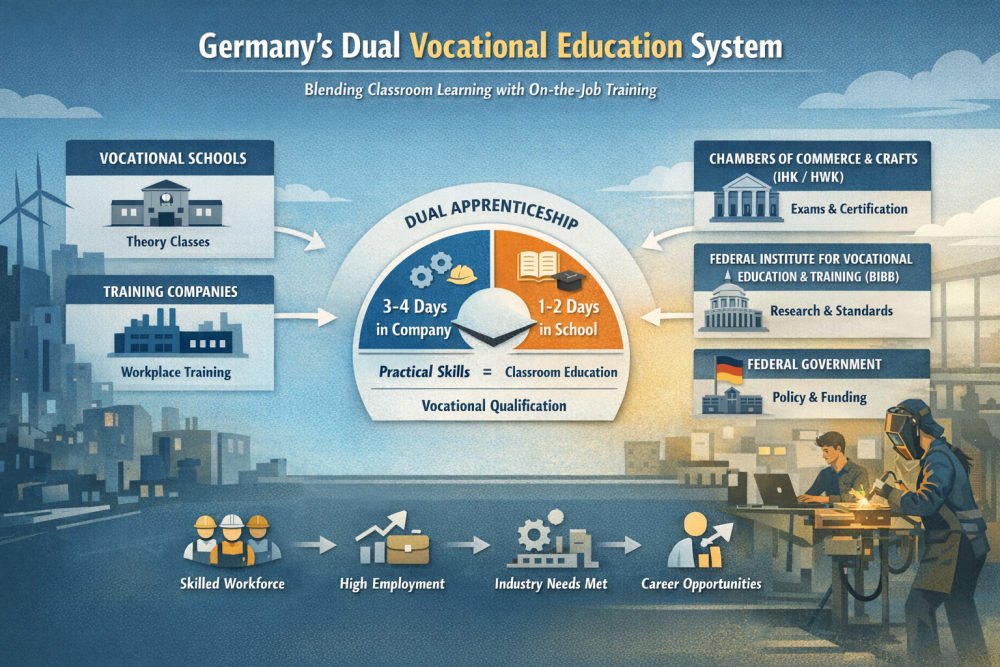
23/2026
Image Generated by the ChatGpt5.2
In a machine shop on the outskirts of Stuttgart, the sound of drills and presses keeps time like a heartbeat. Apprentices wearing protective glasses listen as a master technician explains the fine art of milling precise parts. This scene, as familiar in Mainz as it is in Munich, is not a factory tour but a classroom, and it symbolizes Germany’s enduring economic success: a vocational education and training system that remains the backbone of skilled labor in Europe’s largest economy.
Germany’s Vocational Education System, often called the dual system, is deeply rooted in the country’s industrial culture. Its strong industry collaboration fosters pride and confidence in the system's effectiveness, making it a model for workforce development worldwide.
The dual system is not a narrow apprenticeship program limited to a few trades. As of the early 2020s, Germany offers around 320–327 recognized vocational occupations, ranging from mechatronics technician and baker to IT specialist and healthcare assistant, each with its own training standards set by law and shaped by industry needs.
Origins, Structure, and Stakeholders
The roots of the dual system trace back centuries to medieval craft guilds, but its modern form emerged after World War II and was formalized in the Vocational Training Act (Berufsbildungsgesetz). The act established partnerships among the government, employers, and social partners, including trade unions and chambers of commerce, creating a framework where companies and schools share responsibility for training new generations of skilled workers.
At the national level, the Federal Institute for Vocational Education and Training (BIBB) conducts research, develops training standards, and publishes the VET Data Report, a comprehensive series of analyses on trends, completion rates, and structural conditions. Federal states (Länder) oversee vocational schools, while industry and craft chambers such as the Industrie- und Handelskammer (IHK) regulate company training standards and administer final examinations.
This decentralized structure provides employers with direct influence in shaping curricula and ensures that training remains connected to workplace realities.
Numbers That Tell a Story
Germany’s vocational education system is extensive. In 2022, nearly 469,000 new apprenticeship contracts were signed within the dual system, showing a modest increase from the previous year but still below pre-pandemic levels. Overall, participation in vocational training remains high, with many companies, especially in manufacturing and services, relying on apprentices as a source of skilled workers.
Beyond the dual system, Germany also provides school-based full-time vocational programs, especially in health and social sectors, as well as tertiary vocational paths that enable graduates to pursue advanced qualifications and transition into higher education, offering flexible options aligned with students' career aspirations.
Impact on Labor and Society
One of the clearest benefits of Germany’s skills strategy is the low youth unemployment rate. This success story inspires policymakers and students by showing how practical training creates real opportunities for employment and career growth.
For many employers, from global exporters to small craft workshops, the vocational system remains a reliable source of talent. Companies value apprentices not only for their technical skills but also for their work ethic, familiarity with industry tools, and early integration into corporate culture. Firms often retain apprentices as full-time employees after certification.
Pressure Points and Changing Demographics
Despite its resilience, Germany’s vocational education system faces challenges. Demographic shifts have reduced the number of young people entering the labor market, while globalization and digital transformation are changing skill requirements. Some companies report difficulty in attracting enough qualified candidates, especially for high-tech and service-oriented professions. Young people increasingly choose university pathways, viewing them as more prestigious or flexible in a rapidly changing economy.
Government and industry have responded with initiatives aimed at modernizing curricula — including greater focus on digital skills, expanded prep and transition programs, and targeted outreach to underrepresented groups such as migrants, refugees, and young people with learning difficulties. These strategies aim to broaden participation and ensure a steady flow of talent from diverse backgrounds.
German’s Skills Export
Germany’s model has gained worldwide attention as countries aim to cut youth unemployment and connect education with the workforce. German chambers and federal ministries now work together internationally to share parts of the dual system, helping other nations develop workplace-based training programs. While directly copying the German system is difficult due to cultural and institutional differences, key principles like employer involvement and competency-based standards have shaped international skills policies.
Futuristic Outlook for Germany
As Germany moves further into the 21st century, its vocational education system faces an important crossroads. Its strengths, like employer involvement and legal recognition, provide a foundation for adaptation, inspiring confidence in its future relevance amidst rapid technological change.
Investments in technological training modules, flexible learning pathways, and clearer connections between vocational and academic systems are among the reforms being discussed. Maintaining the dual system's broad appeal, especially among students and families who increasingly view academic degrees as the default choice, is arguably the biggest challenge of all.
In the workshops, classrooms, and boardrooms where Germany’s skills future is being shaped, the message remains clear: skilled work is more than a fallback; it is vital for a competitive economy and a resilient workforce. How Germany balances this message with the ambitions of a new generation will shape the future of both its industries and social fabric in the coming decades.