From a Teacher Training Technical College to a World-Class Skills University in Pakistan
Posted 2 months ago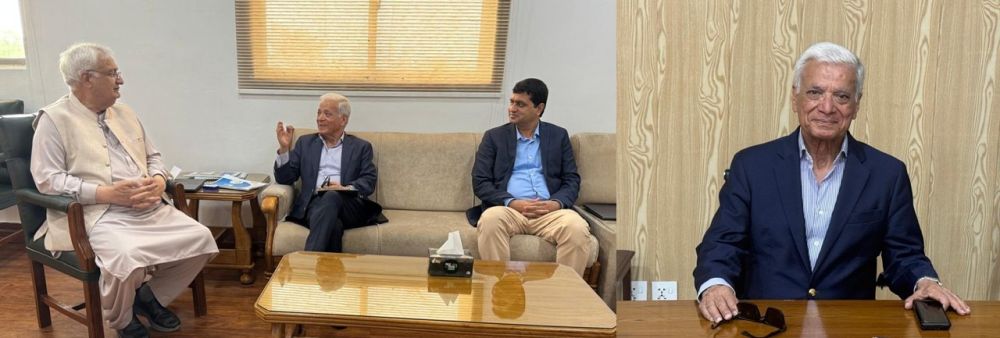
177/2026
Seventeen years after leaving the institution where he had served for fourteen years, Dr. Farid Akhtar Khawaja walked through its gates again. He found that an idea discussed during his final days of service had become a remarkable reality.
The former Director General of the National Technical Teachers’ Training College (NTTTC), the Institute for Promotion of Science Education and Training (IPSET), and the National Institute of Science and Technical Education (NISTE) returned to the campus that had been central to his professional life. As he toured the transformed institution, he revisited his former office and the residence that once housed the Director General and now houses the Vice Chancellor.
For Dr. Khawaja, the visit was more than a nostalgic return. It was a journey through history and a chance to witness the fulfillment of a once-ambitious vision.
The story of the National Skills University Islamabad (NSU) dates to 1985, when NTTTC was established to strengthen the training of technical teachers. Four years later, in 1989, the Institute for Promotion of Science Education and Training (IPSET) was established, broadening the institution's mission. In 1997, the journey entered another important phase with the establishment of the National Institute of Science and Technical Education (NISTE).
These institutions represented successive efforts to build Pakistan’s capacity in technical education, science, teacher training, and technology. Over the decades, their functions, expertise, infrastructure, and human resources became the foundation for something much larger.
Then came 2018.
NISTE was transformed into the National Skills University Islamabad, leveraging decades of institutional experience to create a new national model for skills-based higher education.
The transformation was driven by a simple yet far-reaching realization: Pakistan's future would depend not only on degrees but also on skills that power industry, technology, innovation, and economic growth.
NSU emerged with a distinctive mission: to bring higher education closer to the world of work and to produce graduates equipped with practical competencies, technological knowledge, and the adaptability demanded by a rapidly changing global economy.
For Dr. Khawaja, this transformation held deeply personal meaning. When he retired in 2009, one of the final discussions of his tenure concerned transforming NISTE into a skills-oriented university. Years later, standing on the same campus, he saw that vision realized on a scale few could have imagined at the time.
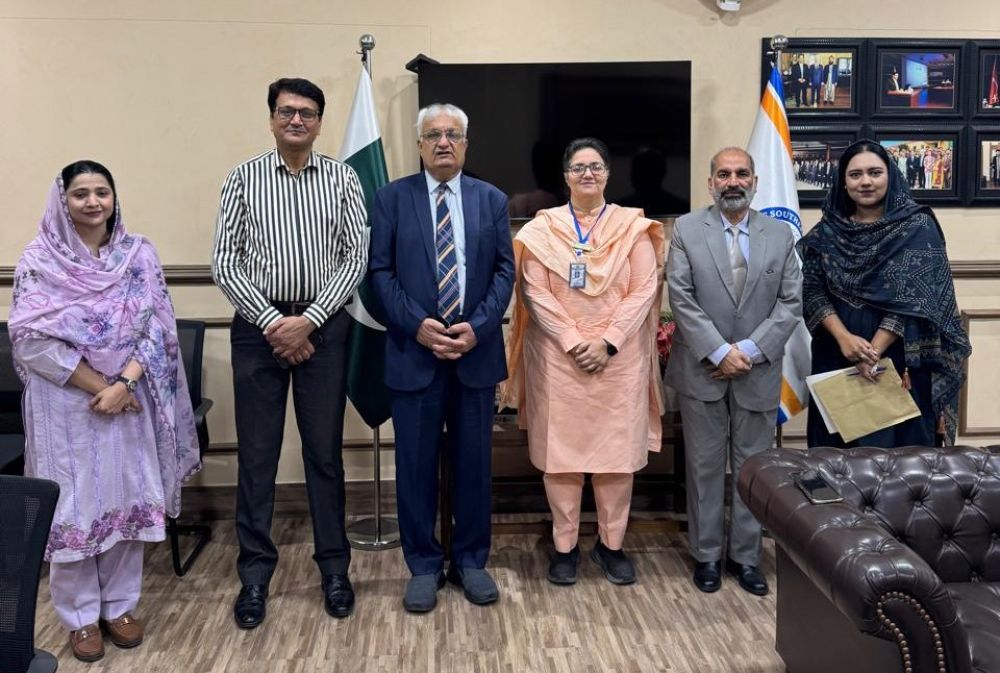
Professor Emeritus Dr. Muhammad Mukhtar, the founding Vice Chancellor of NSU, and Prof. Dr. Saud Altaf, the current Vice Chancellor, warmly facilitated his visit. Both leaders welcomed Dr. Khawaja and acknowledged the contributions of those who had served the institution before the university assumed its present form.
Their tribute carried a broader message: institutions are built by generations, and every generation inherits something from those who came before.
From the classrooms of NTTTC to the scientific and technical mission of IPSET and NISTE, and ultimately to NSU's modern vision, the institution has traveled a remarkable distance.
What began as a college dedicated to training technical teachers has evolved into a university striving to shape the skilled workforce of tomorrow.
The transformation is not merely a change in name or status. It is a 41-year story of institutional evolution from teacher training to science and technology, from technical education to skills development, and from a national institution to a university with a global outlook.
And perhaps the most powerful symbol of that journey was Dr. Khawaja himself returning to the place where the idea was once discussed and discovering that the dream had outlasted its dreamers and become an institution for a new generation.
From NTTTC to IPSET. From IPSET to NISTE. From NISTE to NSU.
A journey of four decades. One enduring vision: to equip Pakistan with the skills to shape its future.