Why the Future Belongs to Skills-Based Education?
Posted 4 months ago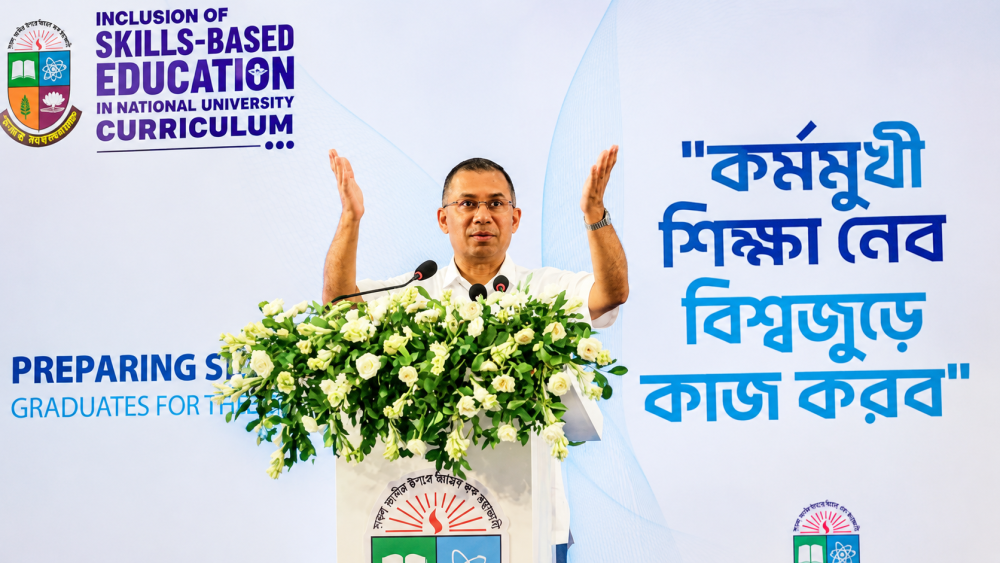
85/2026
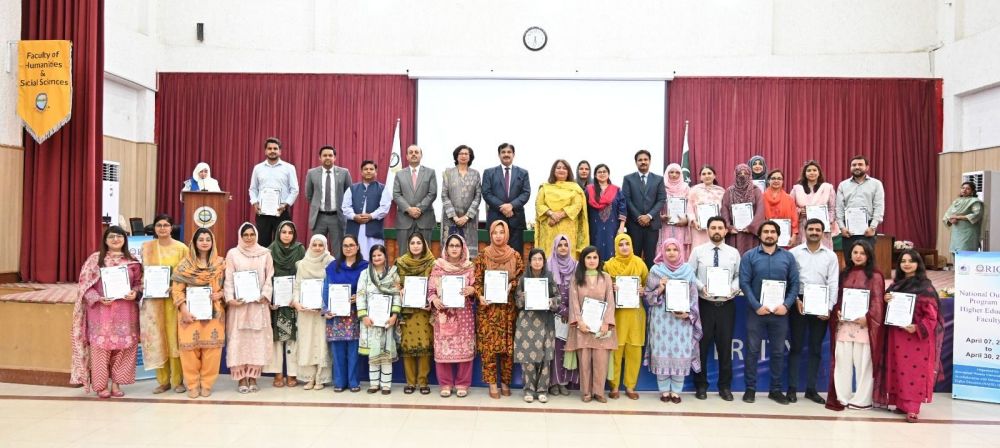
The article draws on Bangladesh's Prime Minister's recent initiative to launch a national teacher-training program in skills-based education and on the broader global movement toward competency-driven learning. The program reflects a growing recognition that education systems must prepare learners not only for exams but also for employment, innovation, and lifelong adaptability. Bangladesh has increasingly invested in national skills development initiatives to align education with workforce needs and economic transformation.
Rethinking Learning for a Rapidly Changing World
For more than a century, educational success has largely been measured by one metric: how much information students can remember. Classrooms have rewarded memorization, examinations have emphasized recall, and degrees have often served as proxies for competence. Yet the world outside the classroom has changed dramatically. Artificial intelligence can retrieve information instantly. Industries are evolving faster than ever. Entire professions emerge and disappear within a decade.
In this new reality, knowledge alone is no longer sufficient.
The question facing educators today is not merely what students know, but what they can do with that knowledge. This shift lies at the heart of skills-based education, an educational philosophy that prioritizes practical competencies, problem-solving, critical thinking, communication, creativity, and adaptability alongside academic knowledge.
The recent launch of a national teacher-training initiative on skills-based education in Bangladesh reflects a growing global recognition that traditional educational models must evolve to meet twenty-first-century demands. Countries seeking economic growth, technological advancement, and social resilience increasingly view skills development as a national priority.
The Skills Gap No One Can Ignore
A paradox exists in many countries today. Millions of young people graduate every year, yet employers frequently report difficulty finding qualified workers. Universities produce degree holders, while industries struggle to recruit individuals with the competencies needed to perform effectively in modern workplaces.
This disconnect is often referred to as the “skills gap.”
The challenge is not that students lack intelligence. Rather, educational systems have often emphasized theoretical knowledge at the expense of practical application. Graduates may understand scientific principles, business concepts, or technological theories, but many have had limited opportunities to apply them to real-world problems.
Skills-based education seeks to close this gap by integrating learning and practice. Students learn not only concepts but also how to analyze situations, collaborate with others, solve complex challenges, and adapt to changing circumstances.
Beyond Jobs: Building Human Capability
The benefits of skills-based education extend well beyond employment.
Critical thinking helps citizens evaluate information in an age of misinformation. Communication skills strengthen social cohesion and leadership. Creativity fuels innovation. Digital literacy enables participation in an increasingly connected world.
Perhaps most importantly, skills-based learning nurtures confidence. Students who build, design, create, present, and solve problems gain confidence. They begin to see themselves not as passive recipients of knowledge but as active contributors to society.
This transformation is especially important for young people entering a future shaped by automation and artificial intelligence. As machines become increasingly capable of handling routine tasks, uniquely human skills such as creativity, empathy, ethical reasoning, and complex decision-making will become even more valuable.
Teachers as Catalysts of Change
No educational reform can succeed without teachers' involvement.
For generations, teachers have primarily served as transmitters of knowledge. In skills-based education, their role expands. They become facilitators, mentors, coaches, and guides who create environments where students learn through inquiry and experimentation, gain opportunities to master new pedagogical approaches, integrate technology effectively, and design learning experiences that connect classroom knowledge with real-life applications.
The decision to invest in teacher training is therefore one of the most important elements of any skills-based education strategy. When educators gain the tools and confidence to implement competency-based learning, the impact can reach millions of students over many years.
Economic Growth Begins in the Classroom
The relationship between skills and economic prosperity is well established.
Nations that cultivate a highly skilled workforce tend to attract investment, foster entrepreneurship, and accelerate innovation. Industries ranging from advanced manufacturing and biotechnology to information technology and renewable energy rely on workers with both technical expertise and problem-solving skills.
Countries across Asia increasingly recognize that economic competitiveness is directly linked to workforce readiness. Skills development programs have become central to national development strategies because they help align education with labor-market demands and emerging technologies.
In this sense, classrooms are not merely places of learning; they are engines of national development.
Preparing for an Unpredictable Future
One of the greatest challenges facing education today is uncertainty. Few educators can accurately predict which jobs will dominate in twenty years. Technologies that do not yet exist may transform entire sectors of the economy.
Because the future is unpredictable, educational systems must focus on transferable skills that remain valuable regardless of technological change. Adaptability, resilience, collaboration, lifelong learning, and digital competence are becoming as important as subject-specific knowledge.
Skills-based education recognizes a simple truth: preparing students for the future requires teaching them how to learn, not merely what to learn.
A New Definition of Educational Success
For decades, educational achievement has been measured by grades, rankings, and exam scores. While these metrics remain important, they tell only part of the story.
A truly successful education system produces graduates who can think independently, communicate effectively, innovate responsibly, and contribute meaningfully to society. It prepares individuals not only for employment but also for citizenship, leadership, and lifelong growth.
The shift toward skills-based education is more than a curriculum reform. It is a redefinition of the purpose of education itself.
In a world where knowledge is abundant, but adaptability is scarce, the most valuable lesson schools can teach may be how to turn knowledge into action. Nations that embrace this philosophy today will be better positioned to thrive in tomorrow's economies and societies.