Understanding TPACK: A Simple Guide to Better Teaching with Technology
Posted 3 months ago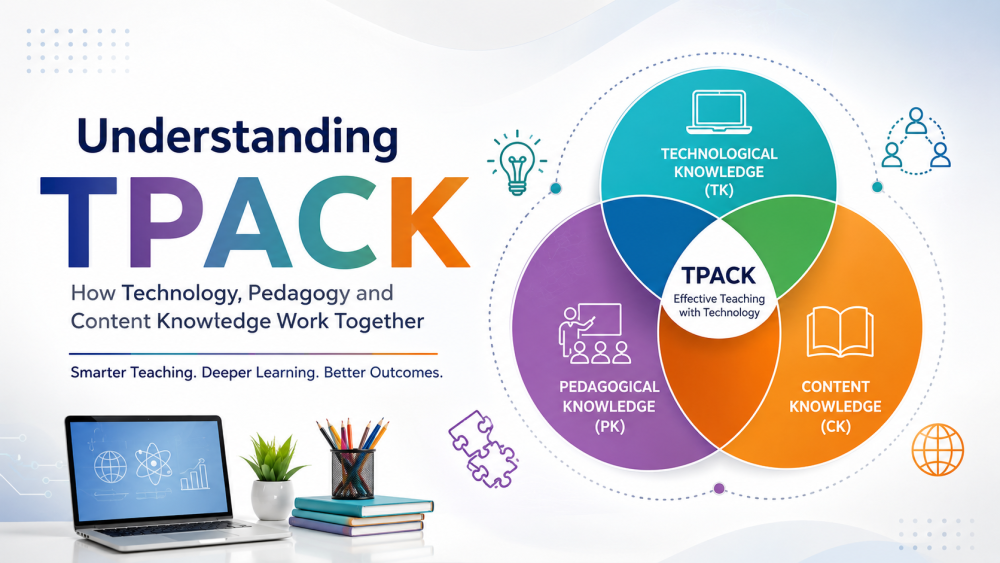
122/2026
Technology has transformed education in remarkable ways. From the early days of the internet to today's artificial intelligence, virtual reality, and interactive learning platforms, teachers now have access to countless digital tools. Yet one important lesson has become increasingly clear: technology alone does not improve learning. What matters is how it is used.
This is where the TPACK Framework comes in.
TPACK stands for Technological, Pedagogical, and Content Knowledge. Developed by education researchers Punya Mishra and Matthew Koehler, the framework helps teachers consider how technology, teaching methods, and subject knowledge should work together to create meaningful learning experiences.
The framework is built on three essential elements:
- Content Knowledge (CK): A teacher's understanding of the subject being taught, such as mathematics, science, history, or languages.
- Pedagogical Knowledge (PK): Knowledge of effective teaching methods, including classroom management, assessment, discussion, collaboration, and student engagement.
- Technological Knowledge (TK): Understanding digital tools and technologies, from presentation software and online simulations to learning management systems and artificial intelligence.
The real strength of TPACK lies in integrating these three areas rather than treating them separately. For example, a physics teacher might use a computer simulation to demonstrate how a spring oscillates back and forth while encouraging students to discuss their observations in an online forum. In this case, technology supports both the subject matter and the teaching strategy, leading to deeper understanding.
Another important aspect of TPACK is context. The same technology that works well for one group of students may not be suitable for another. Factors such as students' age, learning abilities, cultural background, available resources, and even classroom conditions influence whether a particular teaching approach will succeed.
While TPACK is widely respected, it is not a complete solution. It explains the knowledge teachers need but does not offer step-by-step guidance for designing lessons. Nor does it prescribe a single best way to teach every subject. Effective teaching still depends on creativity, professional judgment, and an understanding of learners' unique needs.
In today's rapidly changing educational landscape, TPACK reminds us that successful teaching is not about chasing the latest technology. Instead, it is about thoughtfully integrating what we teach, how we teach, and the tools we use to create engaging, relevant, and effective learning experiences.
As artificial intelligence and digital technologies continue to reshape education, the principles of TPACK are becoming more relevant than ever. Teachers who balance technology with sound pedagogy and strong subject knowledge will be best positioned to prepare students for the future.