From Consortium to National Movement: The Story Behind the International Students Convention
Posted 4 months ago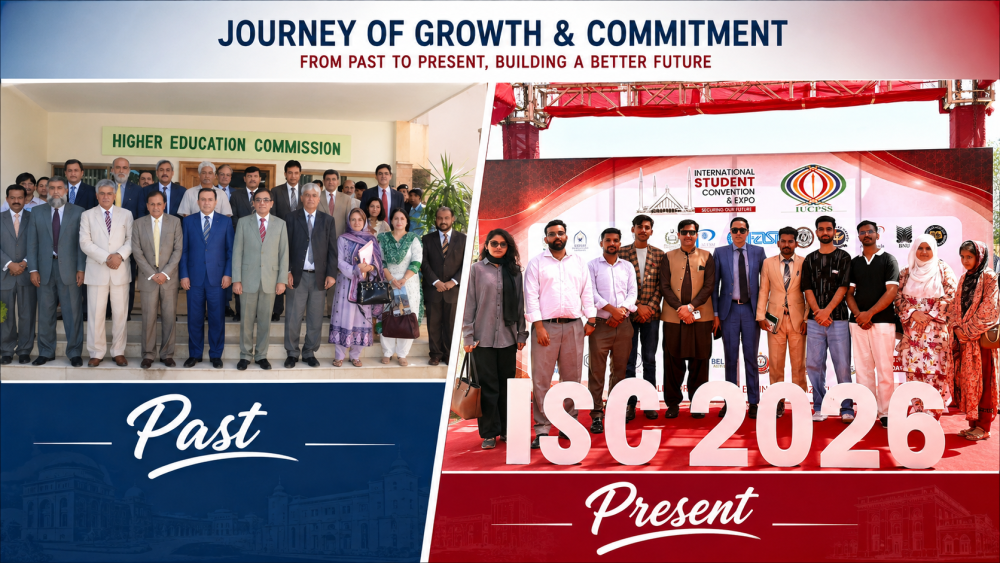
65/2026
The Journey of the International Students Convention highlights its historical significance and evolution into a key national platform.
The story of the International Students Convention traces back to the 2012 vision of the Inter University Consortium for the Promotion of Social Sciences, Arts and Humanities (IUCPSS), which aimed to connect universities across Pakistan through dialogue, scholarship, and youth engagement.
The consortium emerged from close consultation with Prof. Dr. Sohail Naqvi, Prof. Dr. Javaid Laghari, and Prof. Dr. Muhammad Nizamuddin. At its inception, Prof. Dr. Muhammad Mukhtar, then Vice Chancellor of Islamia University, Bahawalpur, served as the founding chairperson. At the same time, Murtaza Noor became widely recognized as the driving force behind the consortium’s continuity, outreach, and sustainability.
The convention in Islamabad exemplifies how that vision has grown into one of Pakistan’s most meaningful, student-centered academic gatherings, inspiring pride in the audience.
The presence of the Sindh-based universities also carried historical resonance. Organizers and participants acknowledged the enduring contributions of the late Syeda Parveen Shah, former Vice Chancellor of the Shah Abdul Latif University (SALU), Khairpur, whose support played a significant role in strengthening the consortium during its formative years. Participants also appreciated the continued institutional support from the university’s current Vice Chancellor, Meritorious Prof. Dr. Yousuf Khushk, under whose leadership the university has expanded opportunities for student participation in intellectual, cultural, and community-oriented initiatives.
The SALU delegation was accompanied by Dr. Ali Raza Lashari, Coordinator of the Students Societies Center, who represented the university in a series of academic forums, youth networking sessions, and collaborative discussions attended by students and faculty representatives from across the country.
At the convention, Dr. Lashari shared SALU’s impactful development of 42 active student societies, showcasing leadership, volunteerism, and social responsibility that can inspire the audience.
According to the presentation, SALU student volunteers mobilized extensively to support rescue, relief, and rehabilitation efforts, assisting more than 46,000 affected individuals across multiple flood-affected communities in Sindh.
The delegation also highlighted a range of student-driven initiatives focused on education, climate awareness, entrepreneurship, cultural harmony, youth development, and social welfare, efforts that drew praise from both organizers and fellow participants.
Beyond speeches and presentations, the convention provided a vital platform for students from diverse backgrounds to foster civic responsibility and shared ideas, emphasizing their role in societal development.
For SALU, its participation went beyond ceremonial attendance. It underscored the university’s broader ambition to cultivate socially conscious graduates capable of contributing to national development and global conversations alike, an aspiration that echoes the consortium’s founding spirit.