From Chalk to CLICKS: How Digital Tools Are Reshaping Classrooms in Pakistan’s Capital School System
Posted 8 months ago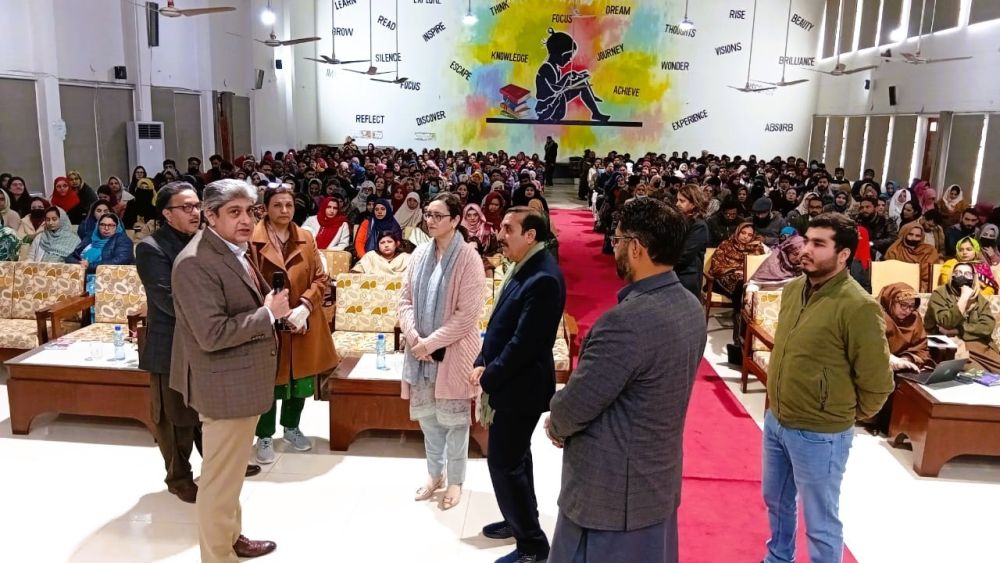
6/2026
On a chilly January morning at an Islamabad school, the atmosphere was filled with a sense of change. Teachers, many of whom had been shaped by years of traditional classroom methods, united to explore digital tools and new teaching approaches. What happened went beyond a typical training session; it reflected a broader transformation taking place as education begins to adopt technology to make learning more effective, engaging, and future ready.
Under the leadership of the Federal Directorate of Education, Pakistan’s federal school system is rapidly progressing with a transition that many education systems around the world are still debating. Guided by the vision of Mr. Nadeem Mahbub, Federal Secretary of Education, the Directorate has prioritized educational technology - EdTech - in its reform agenda, aiming not only to modernize classrooms but also to rethink how learning itself happens.
Over 400 educators from schools and colleges across Islamabad participated in a comprehensive EdTech Digital Interventions training. The large turnout alone indicated a shift: this was not a pilot limited to a few elite institutions, but a system-wide movement for change.
Inside the auditorium and adjoining labs, teachers navigated learning management systems, explored interactive content, and discussed how data-driven insights could help identify struggling students before they fell behind. For many, it was the first sustained exposure to tools that promise personalized learning paths rather than one-size-fits-all instruction.
“This is not about replacing teachers,” one trainer remarked during the session. “It’s about extending their reach.” That philosophy resonated throughout the day, as educators discussed how technology could reduce administrative burdens, free up time for mentoring, and make classrooms more inclusive for diverse learners.
The importance of the initiative was underscored by the presence of the Federal Secretary himself, who moved from group to group, listening as much as speaking. In conversations with educators and institutional leaders, Mr. Mahbub emphasized that EdTech was not a fashionable add-on, but a strategic necessity. In an era defined by rapid technological change, he argued that education systems that fail to adapt risk widening the gap between what students learn and what society demands.
What makes Islamabad’s approach unique is its focus on action rather than words. Instead of making broad promises from a distance, the Directorate is integrating digital tools directly into teaching practices - including lesson planning, assessment, feedback, and professional collaboration. The training session served as a live example of this principle, demonstrating how policies are put into practice in the classroom.
For veteran teachers, the transition comes with some hesitation. Concerns about infrastructure, digital skills, and fair access came up repeatedly. Still, many left the session cautiously optimistic. “I was skeptical,” admitted one college lecturer, “but I can see how this could help me understand my students better.”
Beyond individual classrooms, the broader implications become evident. If maintained, the initiative could help standardize quality across public schools, support evidence-based decision-making, and prepare students for a digital economy that waits for no one. It also sends a message that public education - often dismissed as resistant to change - can, with the right leadership and support, become a hub of innovation.
As the session ended, conversations shifted from syllabi to software. Outside, the winter sun sank low over Islamabad. Inside the education system, however, a different dawn seemed to be beginning - quieter than a revolution, perhaps, but no less significant.
In a country where the future of millions hinges on the quality of public education, these EdTech interventions may well mark the moment when teaching and learning began to look decisively toward the future.